
A cold chain break of even a few hours can destroy an entire shipment of seafood, ruin a batch of pharmaceuticals, or turn a container of fresh produce into a total loss. For Australian exporters shipping premium food and beverage products overseas, and importers bringing in temperature-sensitive goods, understanding how cold chain logistics actually works is the difference between predictable quality and expensive write-offs.
This guide explains what cold chain freight involves, the temperature ranges and packaging requirements for different cargo types, how sea and air cold chain options compare, and how to avoid the breaks that damage cargo.
What is cold chain freight?
Cold chain freight is the continuous temperature-controlled transport of perishable or temperature-sensitive cargo from origin to destination, maintaining a specific temperature range throughout every stage of the journey including storage, loading, transit, and delivery.
The cold chain covers every link in the journey:
- Pre-cooling or freezing at origin before loading
- Temperature-controlled storage at the origin facility
- Refrigerated transport to the port or airport
- Temperature-controlled loading onto the vessel or aircraft
- Maintained temperature throughout transit
- Temperature-controlled unloading and clearance at destination
- Refrigerated delivery to the final consignee
A break at any one of these seven links can compromise the cargo, which is why cold chain logistics requires coordination across every party involved, not just the main transport leg.
What cargo requires cold chain freight?
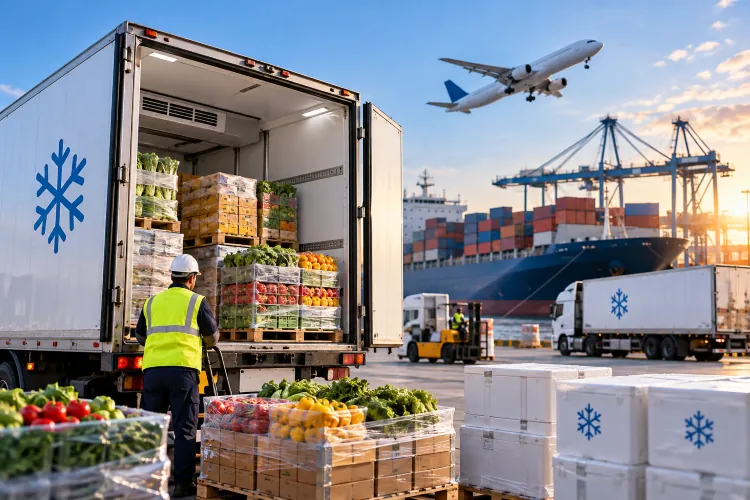
Cargo requiring cold chain freight includes fresh and frozen seafood, meat and dairy products, fresh produce, flowers, pharmaceuticals and vaccines, and certain chemicals that require stable temperature to remain safe or effective.
Common categories by temperature sensitivity:
- Frozen (below -18°C): seafood, frozen meat, ice cream, certain pharmaceuticals
- Chilled (0°C to 4°C): fresh meat, dairy, some fresh produce
- Cool (8°C to 15°C): fruit, vegetables, wine, chocolate, some pharmaceuticals
- Controlled room temperature (15°C to 25°C): certain pharmaceuticals and cosmetics that don’t need active cooling but require stable temperature
Getting the temperature category right matters because over-cooling can damage cargo as much as under-cooling. Some fresh produce, for example, suffers chill injury if kept too cold, even though it still needs active temperature control.
How does cold chain shipping work by sea?
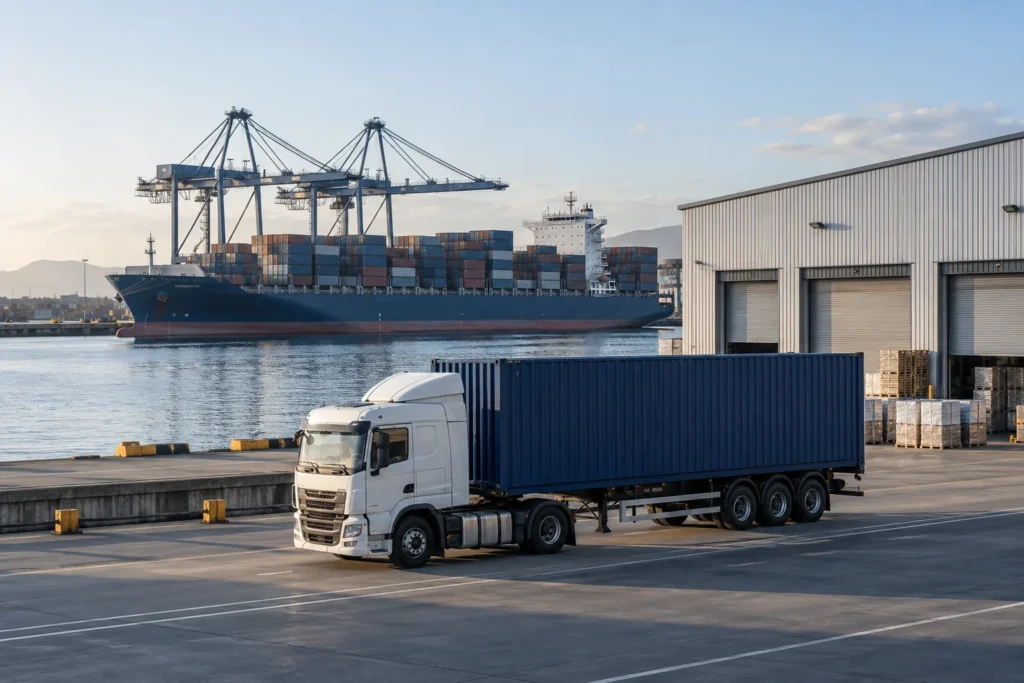
Sea freight cold chain uses refrigerated containers (reefers) that maintain a set temperature throughout the voyage, powered either by the vessel’s onboard power supply or, for containers awaiting loading or after discharge, by a generator or shore power connection.
Key aspects of sea reefer freight:
- Continuous power requirement: reefers need constant electricity throughout the journey, including at the terminal before loading and after discharge
- Pre-trip inspection: reefer containers are checked and set to the correct temperature before cargo is loaded
- Temperature monitoring: modern reefers log temperature data throughout transit, which can be reviewed if a dispute arises
- Longer transit tolerance: sea freight cold chain suits cargo with longer shelf life, since voyages typically run two to five weeks depending on the lane
For container specifications on reefers, see our guide on container types and sizes.
How does cold chain shipping work by air?
Air freight cold chain uses insulated or active temperature-controlled containers (ULDs) or, for smaller shipments, insulated packaging with gel packs or dry ice, suited to cargo with shorter shelf life or higher value that justifies the air freight premium.
Key aspects of air cold chain freight:
- Faster transit: air freight cold chain suits highly perishable cargo like fresh seafood, cut flowers, and time-sensitive pharmaceuticals
- Specialised ULDs: active temperature-controlled unit load devices maintain precise temperature ranges for pharma-grade shipments
- IATA CEIV Pharma certification: a specific certification for handlers meeting pharmaceutical cold chain standards, relevant for vaccines and temperature-sensitive medicines
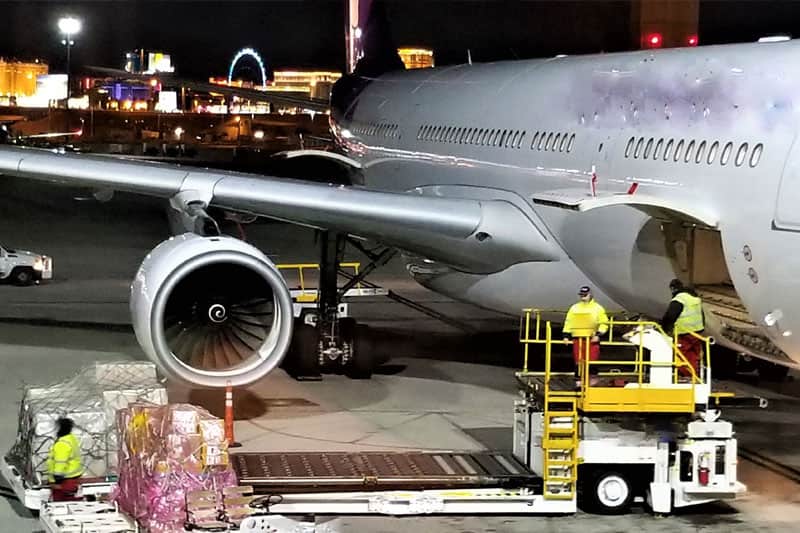
- Ground time risk: the highest risk period for air cold chain is often ground handling time at airports, not the flight itself, since tarmac exposure and terminal delays can break the chain
For the broader picture of how international air freight works, see our guide on international air freight from Australia.
Sea or air for cold chain cargo: which should you choose?
Choose sea freight cold chain for cargo with longer shelf life and lower per-unit value where cost efficiency matters, and choose air freight cold chain for highly perishable, high-value, or time-critical cargo where speed outweighs cost.
Practical decision points:
- Frozen seafood and meat with stable shelf life: often moves by sea reefer cost-effectively
- Fresh seafood, cut flowers, and premium fresh produce: often justifies air freight for freshness on arrival
- Pharmaceuticals and vaccines: typically air freight given the value and sensitivity, though bulk pharma ingredients sometimes move by sea
- Wine: generally moves by sea in temperature-controlled or insulated containers, since wine tolerates longer transit at stable cool temperature
What packaging is required for cold chain cargo?
Cold chain packaging requirements vary by cargo type but generally include insulated packaging, appropriate refrigerants (gel packs, dry ice, or phase change materials), and packaging validated to maintain temperature for the expected transit duration plus a safety buffer.
Key packaging considerations:
- Insulation rating: packaging must be validated to hold temperature for longer than the expected transit time, accounting for potential delays
- Refrigerant type: gel packs for moderate cooling, dry ice for frozen cargo (with dangerous goods declaration requirements, since dry ice is classified as Class 9 dangerous goods), phase change materials for precise temperature bands
- Packaging validation: for pharmaceuticals particularly, packaging is often validated through testing to demonstrate it maintains required temperature under real-world conditions
Because dry ice is classified as a dangerous good, cold chain shipments using it need to meet dangerous goods documentation requirements. For the full picture, see our dangerous goods shipping guide.
What causes cold chain breaks?
Cold chain breaks are most commonly caused by delays at transfer points, equipment failure, inadequate packaging for the actual transit time, incorrect temperature settings, and gaps in monitoring that allow a break to go undetected until arrival.
Common failure points:
- Terminal or airport ground time: cargo sitting without power connection during transfers
- Customs holds: unexpected delays extending transit beyond the packaging’s insulation capacity
- Equipment malfunction: reefer container or ULD failure without backup monitoring
- Incorrect temperature setting: human error setting the wrong temperature for the cargo type
- Poor handover coordination: gaps between road transport, port handling, and vessel or aircraft loading where temperature control lapses
Continuous monitoring with temperature loggers is the best defence, since it flags a break early enough to potentially intervene, rather than discovering damage only on arrival.
How does customs clearance affect cold chain cargo?
Customs and biosecurity clearance delays are particularly damaging for cold chain cargo because every hour of delay eats into the cargo’s remaining shelf life or the packaging’s insulation buffer, making fast, accurate clearance more critical than for general cargo.
Perishable cargo, particularly food and agricultural products, is subject to biosecurity inspection by the Department of Agriculture, Fisheries and Forestry, which can hold cargo for physical examination. For the full picture on how customs clearance works, see how customs brokerage works in Australia.
How Sealogic supports cold chain and perishable freight
Sealogic coordinates cold chain freight for both sea and air shipments, managing reefer container booking, ULD arrangements for air cold chain, temperature monitoring coordination, and priority customs and biosecurity clearance to minimise cargo exposure time. This connects to our broader sea freight and international air freight capability, giving exporters and importers a single point of coordination for temperature-sensitive cargo.
FAQs
What is cold chain freight?
Cold chain freight is the continuous temperature-controlled transport of perishable or temperature-sensitive cargo from origin to destination, maintaining a specific temperature range throughout every stage of the journey.
What temperature is used for frozen cargo shipping?
Frozen cargo, including seafood and frozen meat, is typically shipped at temperatures below -18°C, maintained continuously from origin storage through to final delivery.
Should perishable cargo move by sea or air?
Highly perishable, high-value, or time-critical cargo like fresh seafood and cut flowers typically moves by air, while cargo with longer shelf life and lower per-unit value, like frozen meat or wine, often moves by sea for cost efficiency.
What is IATA CEIV Pharma certification?
IATA CEIV Pharma is a certification confirming that handlers, airlines, and facilities meet pharmaceutical cold chain standards for temperature-sensitive medicines and vaccines during air transport.
What causes cold chain breaks during shipping?
Cold chain breaks are commonly caused by delays at transfer points, equipment failure, inadequate packaging for the actual transit time, incorrect temperature settings, and gaps in monitoring.
Is dry ice classified as a dangerous good?
Yes. Dry ice is classified as a Class 9 dangerous good due to the carbon dioxide gas it releases, requiring dangerous goods documentation when used in cold chain packaging.
Does Sealogic handle cold chain and perishable freight?
Yes. Sealogic coordinates cold chain freight for both sea and air shipments, managing reefer and ULD booking, temperature monitoring coordination, and priority customs and biosecurity clearance.
Conclusion
Cold chain freight rewards precision. Every link in the chain, from origin packaging to final delivery, needs to hold temperature without gaps, and the cost of getting it wrong is usually the entire value of the cargo. Understanding your cargo’s temperature requirements, choosing the right transport mode, and working with a provider who coordinates the full chain rather than just one leg is what protects shipment quality. To discuss cold chain freight for a specific shipment, contact the Sealogic team.