

Import and export support
Preparation and coordination of customs entries and shipping documents for your international movements.
Customs brokerage and clearance coordination in Australia
Bring your customs requirements into the plan early. Our team coordinates documentation and clearance alongside freight and transport, keeping the next handover in view.
Discuss your shipment Import clearance / Export documents / Trade compliance
What we coordinate
Experienced support for the details that keep your cargo moving through customs.
Preparation and coordination of customs entries and shipping documents for your international movements.
Support with tariff classification and applicable duty and tax assessment, based on the details of your goods.
Cargo-specific requirements, inspections and supporting documentation considered before the shipment reaches the border.
From enquiry to movement
Planning your customs brokerage
A clear commercial invoice, packing list and transport reference are useful starting points. The goods description, quantities and parties should be consistent across the document set. Product-specific information may also be required, so involve the broker while there is time to resolve questions.
Requirements depend on the goods, their origin and the transaction. Classification, valuation, duty, tax and biosecurity questions need review for the actual shipment. General website information is not a clearance decision or a substitute for cargo-specific advice.
Read the practical guideSend documents while there is time to clarify descriptions and missing information. Your broker may need product specifications beyond the supplier invoice.
Customs and biosecurity are different processes. A customs outcome alone does not establish that cargo is available for collection.
Classification, value, origin and applicable rules affect the assessment. We do not publish a universal duty rate or promise automatic clearance.
For goods leaving Australia, start with the Australian exporter, overseas consignee, commercial invoice, packing list and booking details. Confirm the applicable export reporting requirements and who is responsible for lodgement. Product-specific controls and the destination country’s requirements need a separate check; an import clearance checklist is not a substitute for an export review.
Exporting from Australia: prepare the whole journeyAustralian service areas
Explore the practical details for your Australian gateway. Service areas do not imply a local branch office.
Useful to know
As early as possible. Early review gives your team time to identify missing details before your shipment arrives.
Start with the commercial invoice, packing list and bill of lading or air waybill. Your broker will confirm any additional documents needed for the particular goods.
No. Requirements depend on the commodity and transaction. The invoice, packing list and transport reference are starting points, not a guarantee that the file is complete.
Start with Australian Border Force import guidance and the Department of Agriculture’s BICON system. Ask your broker to review how the requirements apply to your actual goods.
No. Early review helps identify gaps, but authority decisions, inspections and other release requirements can affect timing. Build that uncertainty into delivery planning.
Tell us who has booked the international movement, the Australian gateway and the shipment references. We can discuss the brokerage and delivery support you need without assuming Sea Logic controls the overseas freight. Establish who will provide the transport documents, communicate arrival changes and arrange each release. A clearly defined scope is especially useful when several parties share the movement.
A description such as parts or samples may not adequately identify the goods. Be ready to provide the actual product name, materials, intended use and supporting specifications. Ask your broker what is required to assess classification, value and origin for the transaction. Do not assume a supplier’s description or tariff code alone settles the Australian assessment.
Customs clearance is one part of the handover. Biosecurity requirements, carrier document release, cargo availability and terminal or depot collection arrangements may still need attention. Confirm which milestones are complete before arranging receipt. An expected vessel or flight arrival date is not confirmation that a truck can collect the goods immediately.
Let’s move your business forward
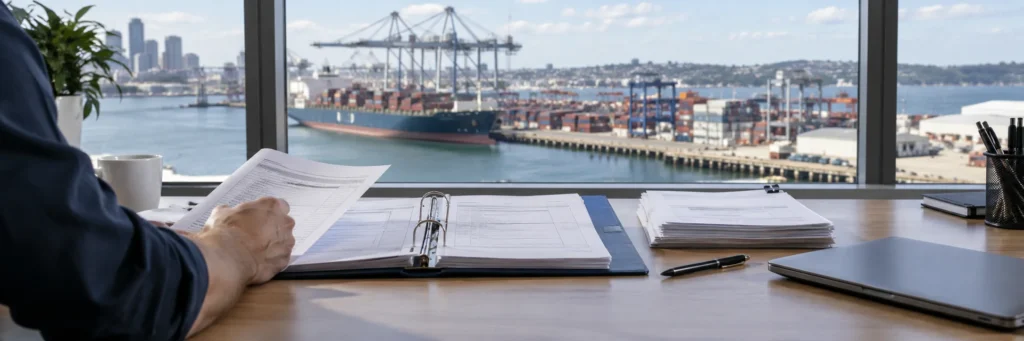
Every commercial shipment entering Australia must pass through customs clearance before it can be released. No exceptions. Customs clearance is where your goods are formally declared to the…
Read article ↗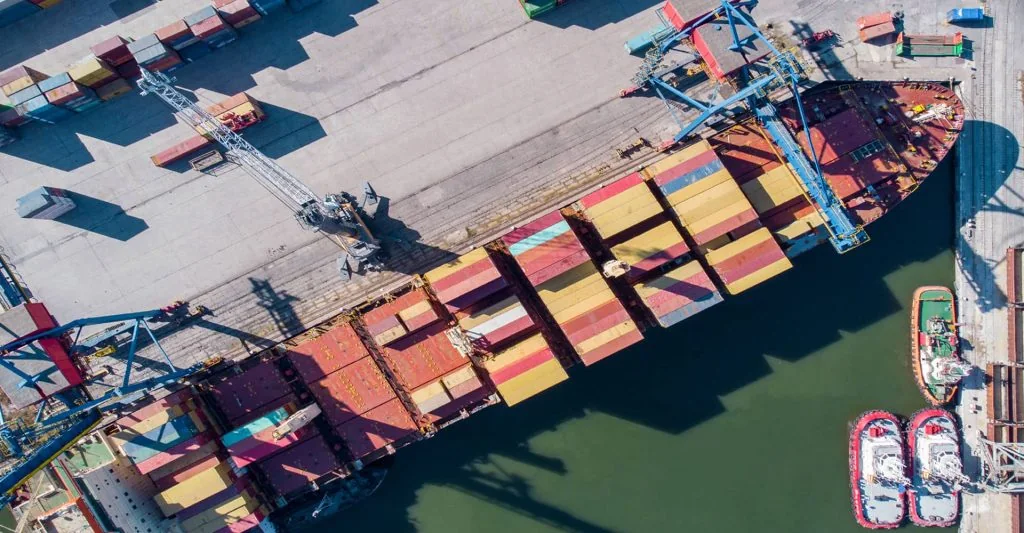
Every Australian importer pays two main charges to the Australian Border Force on commercial shipments: customs duty and Goods and Services Tax (GST). Together they can add 10%…
Read article ↗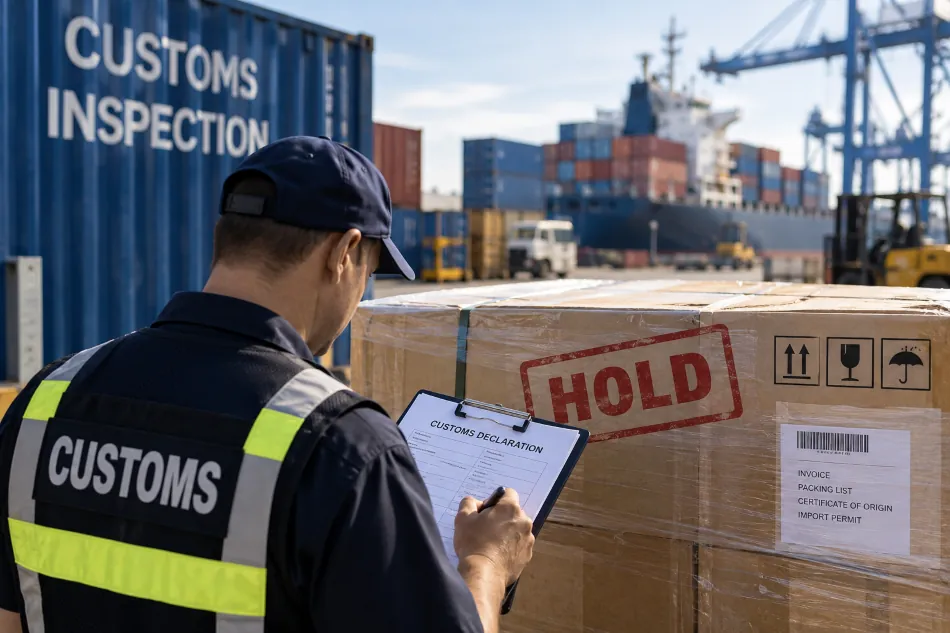
Your tracking status changes to ‘held for examination’ and everything stops. A customs hold means your goods are stuck at the port or airport, unable to be released…
Read article ↗