
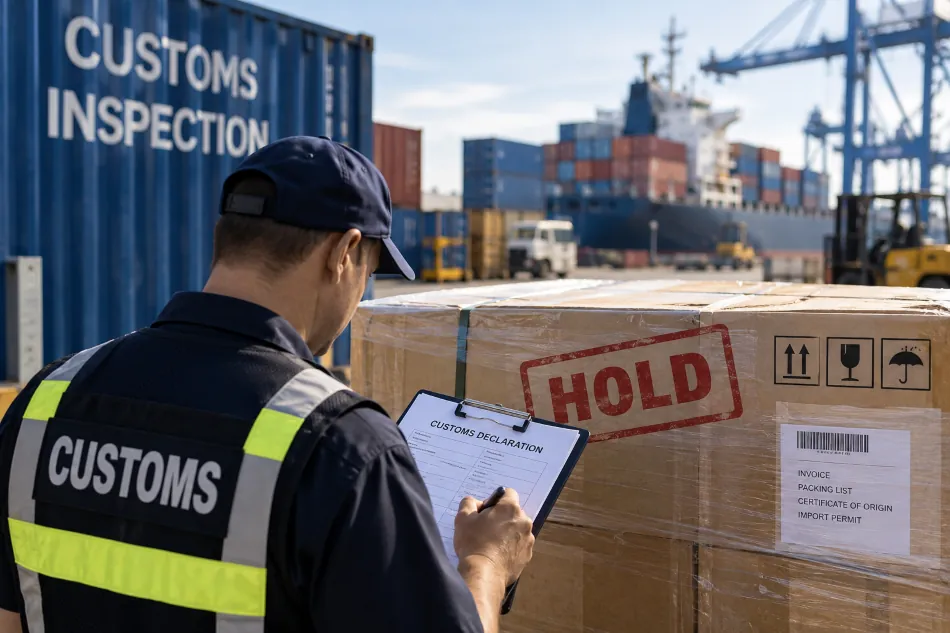
Your tracking status changes to ‘held for examination’ and everything stops.
A customs hold means your goods are stuck at the port or airport, unable to be released for delivery, while an issue is investigated or an inspection is completed. During that time, demurrage and storage charges accumulate daily. Your warehouse cannot plan around an unknown release date. Downstream customers wait.
The good news is that most customs holds are preventable. Understanding what triggers them is the first step to keeping your shipments moving.
This guide covers the most common reasons customs holds happen in Australia, what to do when your goods are held and how to prevent holds from happening in the first place.
For the broader clearance process, see our customs clearance guide.
Table of Contents
- What Is a Customs Hold?
- Who Can Place a Hold on Your Cargo?
- The Seven Most Common Causes of Customs Holds
- What Happens When Your Goods Are Held
- How Much Does a Customs Hold Cost?
- How to Prevent Customs Holds
- What to Do If Your Cargo Is Held
- Key Takeaways
- FAQs
1. What Is a Customs Hold?
Quick Definition: A customs hold is when Australian border authorities prevent an imported shipment from being released for delivery while they investigate a compliance concern, verify documentation or conduct a physical inspection. Holds can be initiated by either the Australian Border Force (ABF) or the Department of Agriculture, Fisheries and Forestry (DAFF), and they remain in place until the underlying issue is resolved.
Holds are distinct from routine processing time. A shipment moving through standard clearance is not ‘held’—it is simply being processed. A hold specifically means something has triggered further scrutiny.
2. Who Can Place a Hold on Your Cargo?
Two government agencies can hold your shipment:
– The Australian Border Force (ABF) manages holds related to declarations, duty, valuation, security concerns and compliance with trade regulations.
– The Department of Agriculture, Fisheries and Forestry (DAFF) manages holds related to biosecurity, quarantine, contaminated packaging and prohibited plant or animal material.
Depending on the reason, resolving a hold may involve providing additional documentation, paying inspection fees, arranging treatment (fumigation, cleaning) or, in serious cases, re-exporting or destroying the goods.
3. The Seven Most Common Causes of Customs Holds
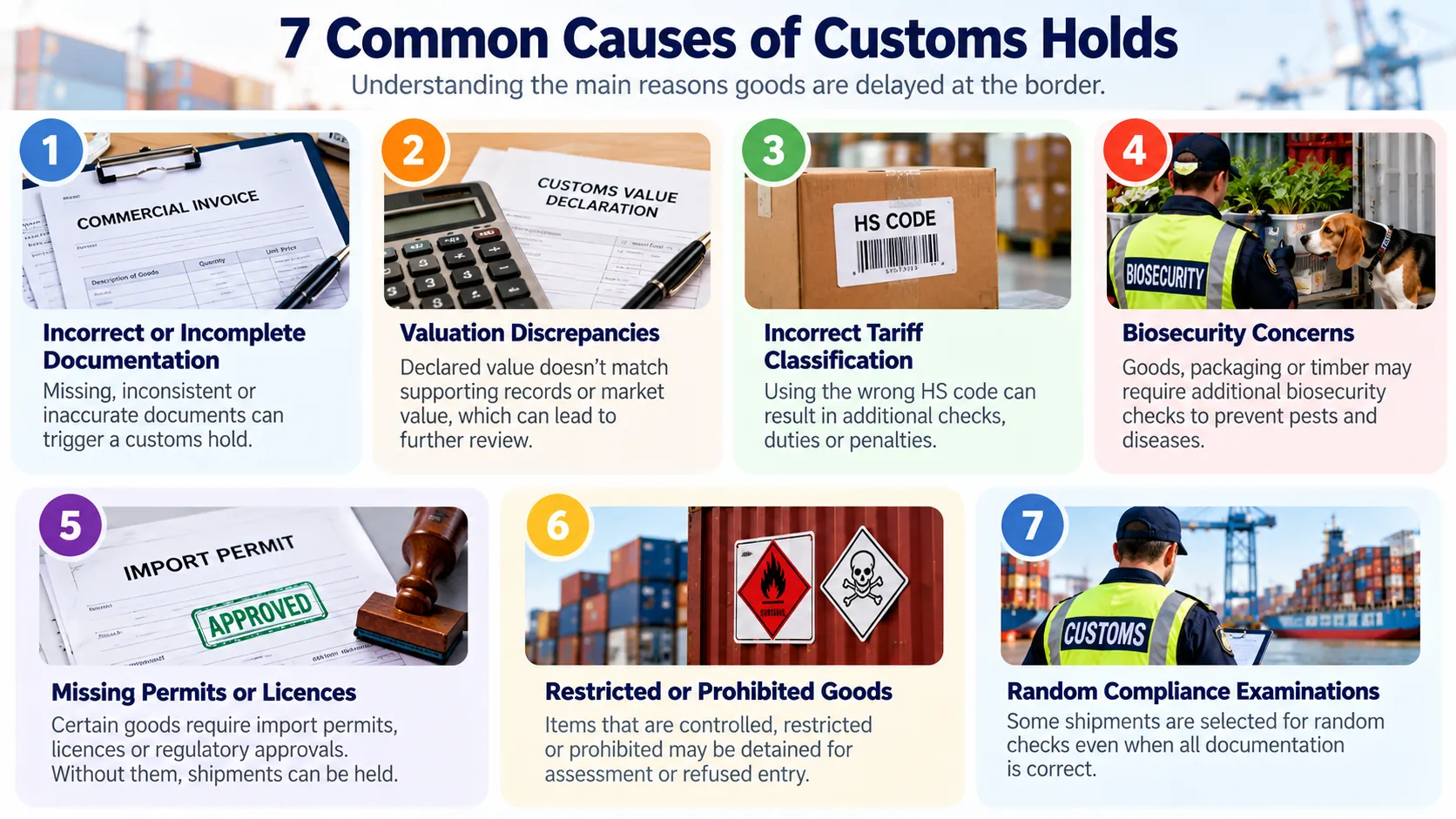
1. Incorrect or Incomplete Documentation
This is by far the most common cause. A mismatch between your commercial invoice and packing list, a vague product description, a missing packing declaration or an incorrect country of origin will trigger an ABF query. Your goods sit while the discrepancy is resolved.
2. Undervaluation or Valuation Discrepancies
If the ABF suspects the declared value is lower than the actual transaction value, they will request supporting documentation such as bank transfers, purchase orders or contracts. Undervaluation is treated seriously and can result in backdated duty assessments plus penalties.
3. Incorrect Tariff Classification
If the HS code declared does not match the actual goods, the ABF may reclassify them. This can change the duty rate, trigger additional GST and result in penalties if the original classification was clearly wrong.
4. Biosecurity Concerns
DAFF holds cargo when packaging materials (particularly untreated timber), goods themselves, or accompanying contamination pose a biosecurity risk. Common triggers include ISPM 15 non-compliant timber, soil residue on used machinery, seeds or plant material in packaging, and Brown Marmorated Stink Bug (BMSB) risk during the seasonal measures period.
5. Missing Permits or Licences
Certain goods require specific import permits: food products, therapeutic goods, chemicals, timber, plant material, some electronics and firearms. If the permit is not attached to the declaration, the goods are held until it is provided.
6. Restricted or Prohibited Goods
Australia restricts or prohibits a range of items including certain weapons, drugs, plant and animal products, hazardous materials and intellectual property infringing goods. If restricted goods are detected, the shipment is held pending review and may be seized entirely.
7. Random Compliance Examinations
The ABF conducts random physical examinations of shipments as part of its compliance auditing program. These holds are unavoidable but typically resolved within a few days if documentation is in order and the cargo matches the declaration.
4. What Happens When Your Goods Are Held
The exact process depends on why the hold was placed, but the general sequence is:
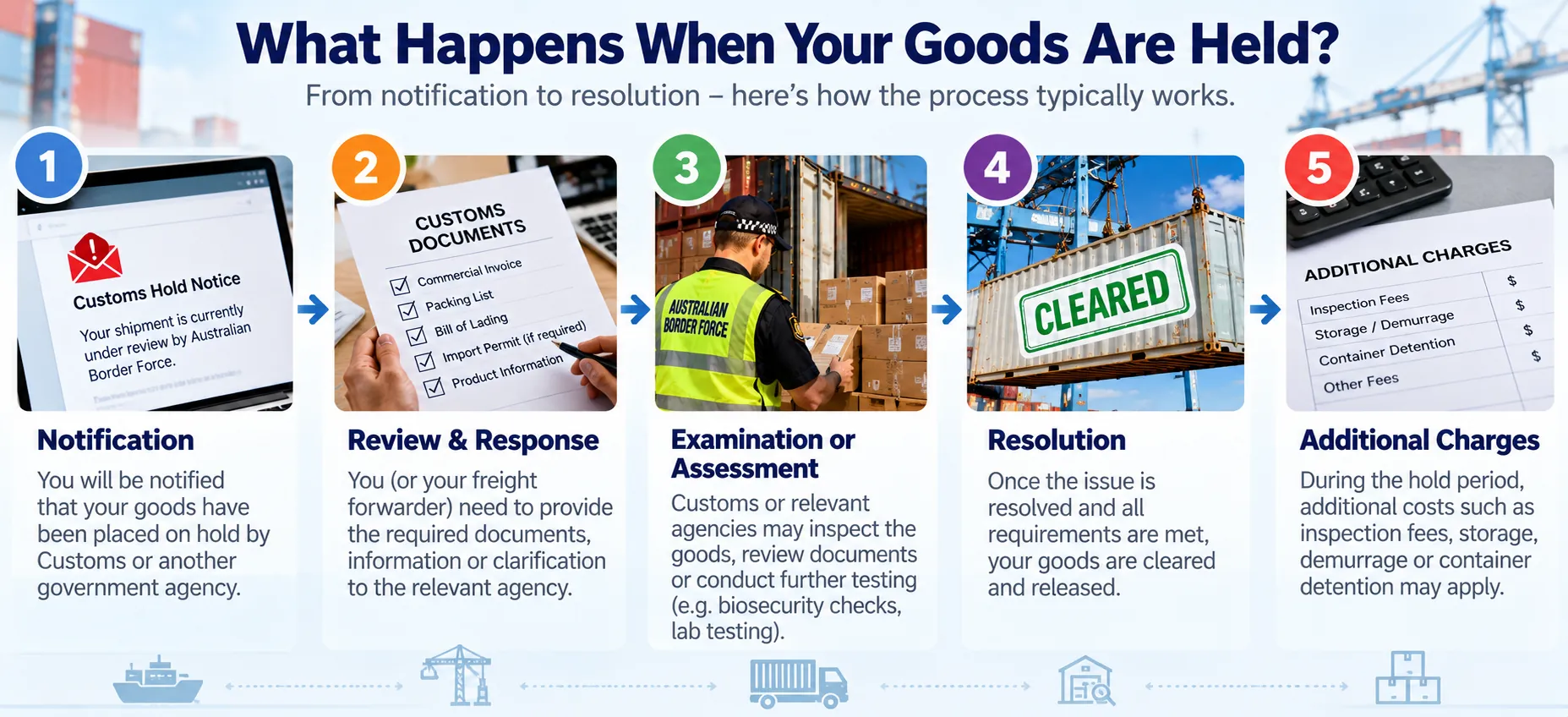
- Notification. Your customs broker receives a message through the Integrated Cargo System (ICS) indicating that the shipment is held and why. This may be a document request (amber line), a physical examination request (red line) or a biosecurity direction from DAFF.
- Response. Your broker responds with the requested information, supporting documents or arrangements for inspection. If a physical inspection is required, the cargo is directed to an approved examination facility (AEF).
- Examination or review. ABF or DAFF officers inspect the cargo, verify against the declaration and check for compliance. Any issues found (undeclared items, prohibited goods, contamination) escalate the hold.
- Resolution. If everything checks out, the hold is lifted and the goods are released. If issues are found, further action is required — additional duty payment, treatment (fumigation), destruction or re-export.
- Additional charges. Any inspection fees, treatment costs, storage charges and demurrage that accumulated during the hold are payable by the importer.
5. How Much Does a Customs Hold Cost?
The direct and indirect costs of a customs hold add up quickly:
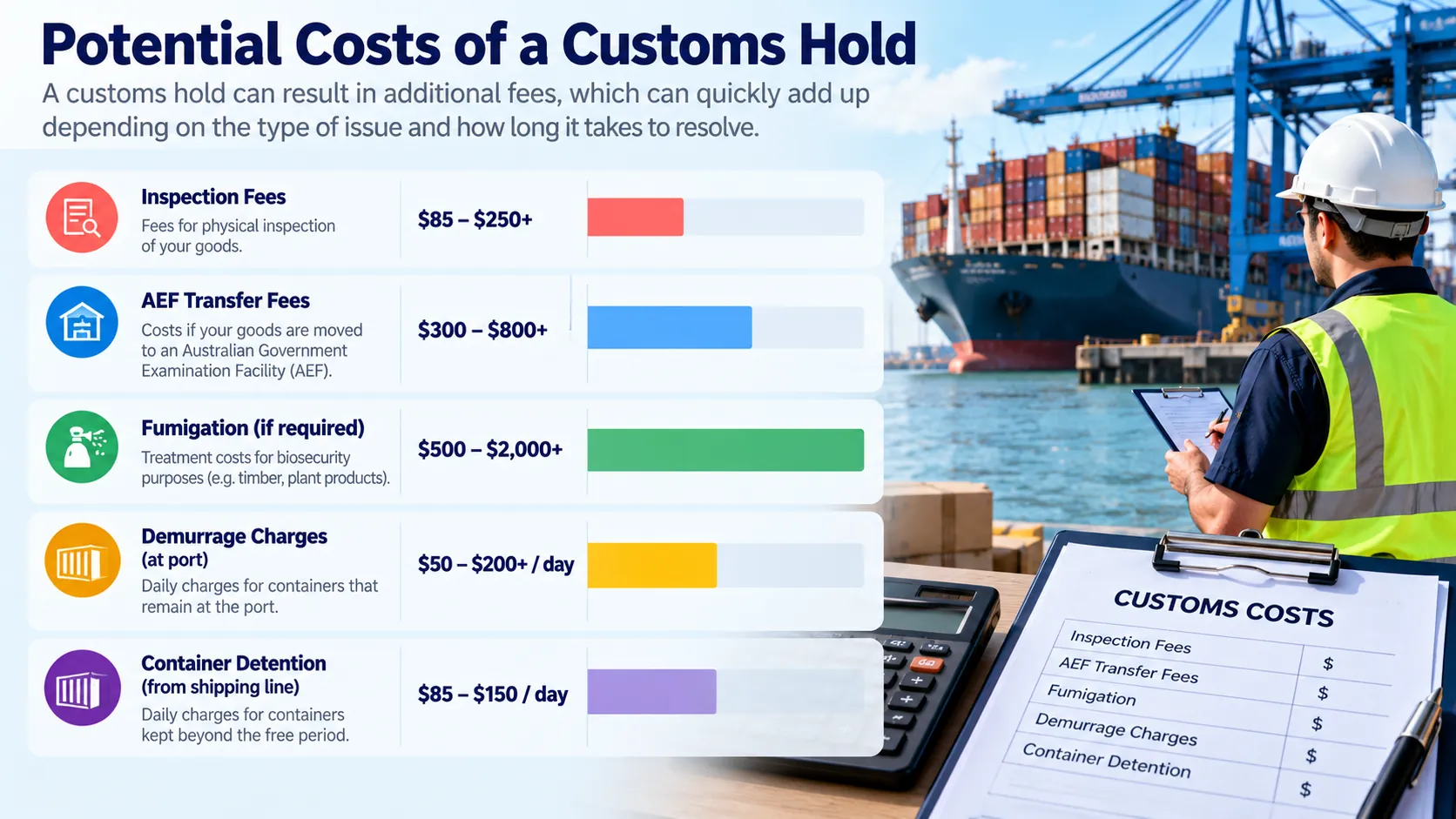
| Cost | What It Covers | Typical Range |
| Physical inspection fee | ABF or DAFF examination charge | $85 to $250+ per exam |
| AEF transfer and unpack | Moving cargo to inspection facility | $300 to $800+ |
| Fumigation / treatment | If biosecurity issue found | $500 to $2,000+ |
| Demurrage | Cargo sitting at port beyond free storage | $50 to $200+ per day |
| Container detention | If container is with importer beyond free days | $85 to $150 per day |
| Storage | Additional warehouse or terminal storage | Varies by facility |
| Documentation/admin | Broker fees for handling the hold | $100 to $400+ |
Beyond direct fees, holds cause commercial costs: delayed sales, stockouts, missed deadlines and the operational impact on your warehouse and downstream customers.
6. How to Prevent Customs Holds
- Double-check documentation before it leaves your hands. Ensure the commercial invoice, packing list, bill of lading and packing declaration are consistent. Values match, quantities match, descriptions match, country of origin matches.
- Provide accurate and detailed goods descriptions. Vague descriptions like ‘gifts’ or ‘samples’ invite scrutiny. Be specific: ‘stainless steel kitchen utensils, 500 units’.
- Declare the true transaction value. Undervaluation is one of the fastest ways to get audited. Declare the actual price paid, including any add-ons or commissions.
- Get tariff classification right the first time. Work with a licensed customs broker who takes the time to classify your goods accurately based on their composition and use.
- Confirm packaging compliance with your supplier. All timber packaging must meet ISPM 15 treatment standards. Confirm the packing declaration is completed correctly and provided before shipping.
- Check import permits before ordering. Use the BICON database to verify whether your goods need specific permits or licences. Applying for permits after the fact means your goods sit at the border while the paperwork catches up.
- Clean used equipment thoroughly. Used machinery, vehicles and industrial equipment are high biosecurity risks. Pre-departure cleaning to remove soil, plant material and organic residue significantly reduces the chance of a DAFF hold.
- Pre-lodge your declaration. Submitting your import declaration before the vessel arrives gives the ABF and DAFF time to process without holding your cargo up at the terminal.
Expert Tip: Sea Logic’s customs brokerage team reviews every shipment’s documentation before lodgement to catch errors that would otherwise trigger a hold. This upfront check pays for itself many times over in avoided storage, demurrage and inspection fees.
7. What to Do If Your Cargo Is Held
- Contact your customs broker immediately. Your broker has visibility of the hold reason through ICS and can start responding straight away. Speed matters because charges accumulate daily.
- Provide requested documentation promptly. If the hold is for missing or unclear documents, gather what is needed and get it to your broker within hours, not days.
- Understand the reason before acting. Different hold types (ABF vs DAFF, document vs physical inspection) have different processes and timeframes. Your broker will explain what to expect.
- Do not attempt to bypass the hold. Any attempt to alter documentation retroactively or misrepresent the goods will escalate the situation and can result in penalties or seizure.
- Prepare for additional costs. Inspection fees, treatment costs and demurrage will need to be paid before release. Factor these into your cash flow while the hold is being resolved.
- Learn from the hold. Every hold has a preventable cause. Review what triggered it with your broker and update your documentation or supplier processes to prevent recurrence.
8. Key Takeaways
Summary: Preventing customs holds
– Customs holds prevent cargo from being released while an issue is investigated by the ABF or DAFF.
– The most common cause is documentation errors: mismatched values, missing paperwork, vague descriptions.
– Other frequent triggers: valuation issues, wrong tariff classification, biosecurity non-compliance, missing permits, random compliance checks.
– Holds cost money through inspection fees, demurrage, storage and treatment charges, plus commercial impact from delays.
– Prevention is straightforward: accurate documentation, correct tariff classification, compliant packaging, timely permits and pre-lodgement.
– If your cargo is held, contact your customs broker immediately and provide requested information within hours.
– Every hold has a preventable cause. Review each one to improve future shipments.
9. Frequently Asked Questions
What is a customs hold in Australia?
A customs hold is when the Australian Border Force or Department of Agriculture, Fisheries and Forestry prevents an imported shipment from being released while they investigate a compliance concern or conduct a physical inspection. Holds remain until the underlying issue is resolved.
Why is my shipment stuck in customs in Australia?
The most common reasons are incomplete or inaccurate documentation, valuation discrepancies, incorrect tariff classification, biosecurity concerns, missing import permits, restricted goods or random compliance examinations. Your customs broker can access the exact reason through the Integrated Cargo System.
How long does a customs hold take to resolve?
It depends on the reason. A document request (amber line) typically resolves within 1 to 3 business days. A physical inspection (red line) takes 3 to 7 business days. A biosecurity hold requiring fumigation or treatment can take 5 to 10+ business days.
How much does a customs hold cost?
Direct costs include inspection fees ($85 to $250+), AEF transfer charges ($300 to $800+), treatment costs if required ($500 to $2,000+), demurrage ($50 to $200 per day) and container detention ($85 to $150 per day). Add commercial costs from delays and stockouts.
What causes biosecurity holds in Australia?
Common causes are non-compliant timber packaging (not meeting ISPM 15 standards), soil or organic residue on used machinery, undeclared plant or animal material, seeds in packaging, and Brown Marmorated Stink Bug risk during the seasonal measures period (typically September to April).
Can I do anything to release my goods faster?
Respond to any information requests within hours, ensure all requested documentation is complete and accurate, and work with your customs broker to prioritise the case. Attempting to bypass the hold or alter documentation will only make the situation worse.
How do I prevent customs holds in the future?
Verify documentation accuracy before lodgement, provide detailed goods descriptions, declare true transaction values, use correct tariff classifications, confirm packaging compliance with your supplier, apply for import permits before shipping, clean used equipment thoroughly and pre-lodge declarations before vessel arrival.
Cargo held at customs? Sea Logic coordinates with licensed brokerage partners to help you understand a customs hold and the information needed to address it. Call 03 9114 8543 or book a customs support call at sealogic.com.au