
Getting your first international order is exciting. Getting it there without problems is a different challenge entirely.
For Australian businesses moving from domestic sales to exporting, the freight side of the transaction is where most mistakes happen. Missed documentation, incorrect packing, wrong incoterms, unfamiliar destination country requirements. Any one of these can hold up a shipment, cost you money and damage the relationship with your overseas buyer.
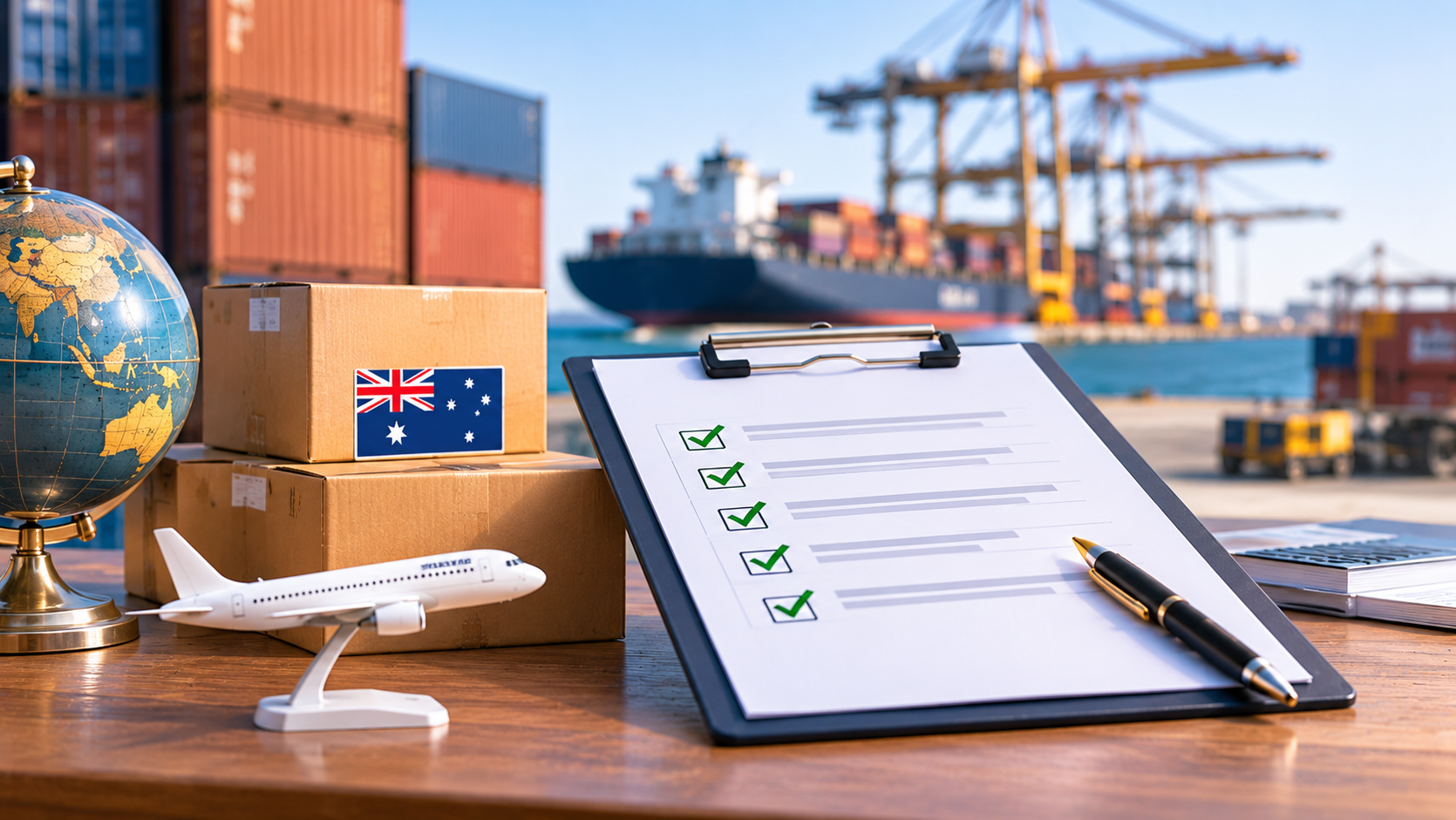
The good news is that exporting is a repeatable process. Once you have the right checklist in place, each shipment becomes easier and more predictable.
This guide walks through the complete freight forwarding checklist for Australian exporters, from planning your first shipment through to handover at destination.
For related import guidance, see our sea freight import guide and Incoterms guide.
Table of Contents
1. Why Exporting Deserves Its Own Playbook
2. Before You Ship: Export Planning
3. The Export Documentation Checklist
4. Understanding Export Declarations
5. Packing and Labelling Requirements
6. Choosing Your Freight Mode
7. Working with a Freight Forwarder
8. Export Customs Clearance
9. Destination Country Requirements
10. Post-Departure Handover
11. Common Export Mistakes
12. Key Takeaways
13. FAQs
1. Why Exporting Deserves Its Own Playbook
Exporting is not just importing in reverse. There are different regulations, different documents, different responsibilities and different risks. Australian exporters need to comply with both Australian export controls and the import requirements of the destination country.
A structured checklist reduces the mental load of every shipment. Instead of reinventing the process each time, your team follows the same steps and captures the same information. Errors drop, timelines improve and your overseas customers get a consistent experience.
2. Before You Ship: Export Planning
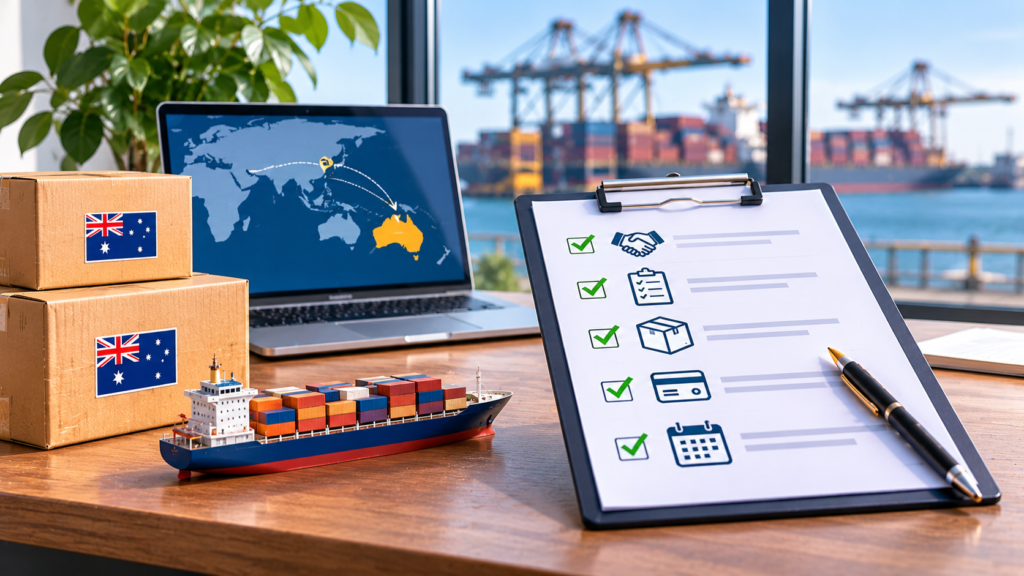
The most productive export work happens before you touch a freight forwarder. Here is what to lock down first:
1. Confirm your buyer and Incoterm. Agree on payment terms, delivery timeline and the Incoterm (FOB, CIF, EXW, DDP etc.) with your buyer in writing. This determines who arranges and pays for what.
2. Check destination country requirements. Every country has different import rules, permits, labelling, product standards and duty rates. Research these before shipping or ask your buyer for a documentation checklist from their side.
3. Verify your product is not export-restricted. Some Australian exports require permits (defence goods, cultural heritage items, certain chemicals, specific food products). Check with the Australian Border Force or the
Department of Home Affairs before proceeding.
4. Understand payment terms and risk. Letter of credit, telegraphic transfer, open account and cash against documents all have different risk profiles. For new buyers, prepayment or letter of credit reduces risk.
5. Plan your production and shipping timeline. Work backwards from the buyer’s required delivery date, allowing for freight transit time, customs clearance at both ends and buffer for delays.
3. The Export Documentation Checklist
Here are the documents you need for a standard export shipment from Australia. Some are always required, others depend on the product, destination or trade agreement:
| Document | When Required | Purpose |
| Commercial Invoice | Always | Details goods, value, Incoterm, buyer/seller. Basis for customs assessment |
| Packing List | Always | Itemised breakdown of contents, weights, dimensions |
| Bill of Lading / Air Waybill | Always | Transport document; contract of carriage; document of title (sea) |
| Export Declaration (B957) | Goods over AUD $2,000 | Lodged with ABF before export |
| Certificate of Origin | FTA claims | Proves country of manufacture; unlocks preferential duty at destination |
| Shipper’s Letter of Instruction (SLI) | Recommended | Authorises freight forwarder to act on shipper’s behalf |
| Verified Gross Mass (VGM) | Sea freight FCL | Mandatory total weight declaration; container will not load without it |
| Export Permit / Licence | Regulated goods | Required for restricted exports (defence, biological, cultural) |
| Fumigation / Treatment Certificate | Some destinations | Required for timber, agricultural products, some destinations |
| Insurance Certificate | CIF/CIP shipments or if requested | Proves marine cargo insurance in place |
Expert Tip: Send your draft commercial invoice and packing list to your buyer for review before finalising. Any errors caught here save you from clearance issues at destination. A good freight forwarder also reviews documents before lodgement to catch problems early.
4. Understanding Export Declarations
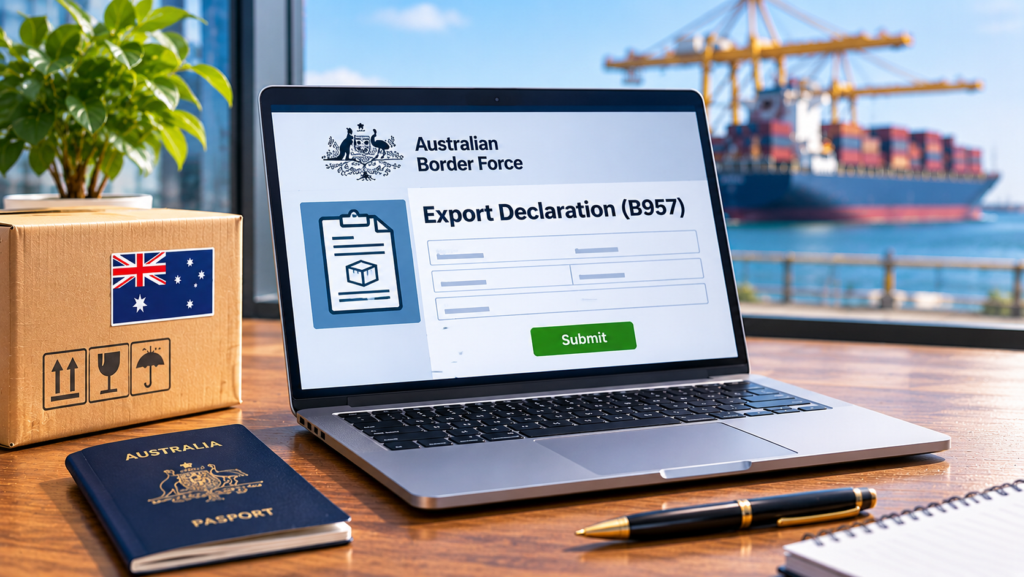
If you are exporting goods with a Free on Board value over AUD $2,000, you must lodge an Export Declaration (B957) with the Australian Border Force before the goods leave Australia. This applies whether you are shipping by sea or air.
The declaration includes:
- Exporter (your business) details and ABN
- Consignee (buyer) details in destination country
- Description and tariff classification of goods
- FOB value
- Country of destination and origin
- Shipping vessel or flight details
- Any applicable export permit numbers
The declaration is lodged electronically through the Integrated Cargo System (ICS). Most exporters use a freight forwarder or customs broker to handle this. Failure to lodge or lodging with errors can result in shipments being held, penalties or seized cargo.
Goods valued under AUD $2,000 typically do not require a formal export declaration but may still need customs reporting depending on the product category.
5. Packing and Labelling Requirements
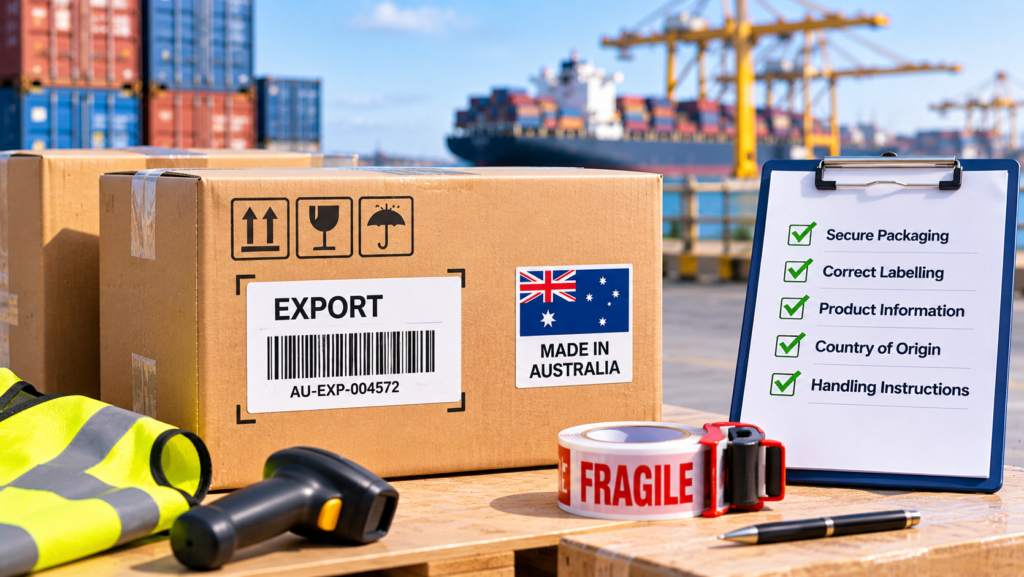
Correct packing protects your goods in transit and satisfies destination country biosecurity requirements. Consider:
- Compliance with the destination country’s ISPM 15 requirements for timber packaging
- Robust packaging suited to sea or air freight handling
- Correct product labelling (country of origin, product markings, safety symbols)
- Clear shipping marks on the outside of cartons (buyer name, order number, port of destination)
- Weight limits per carton (usually 25 kg for manual handling)
- Palletisation to industry standard sizes (Australian standard 1165 x 1165 mm or international standard 1200 x 800 mm)
For containerised sea freight, cargo needs to be loaded and secured to prevent movement during the voyage. Air freight cargo typically needs to be palletised and shrink-wrapped for handling through airport freight terminals.
6. Choosing Your Freight Mode
| Mode | Best For | Typical Cost Signal |
| Sea Freight (FCL) | Large volumes, non-urgent, heavy cargo | Lower per unit; slower |
| Sea Freight (LCL) | Small volumes not filling a container | Lower cost, longer transit |
| Air Freight | Urgent, lightweight, high-value goods | Higher cost, fast transit |
| Break Bulk | Oversized cargo not fitting containers | Specialised, higher cost |
For details on each mode, see our air freight guide, FCL vs LCL guide and break bulk guide.
7. Working with a Freight Forwarder
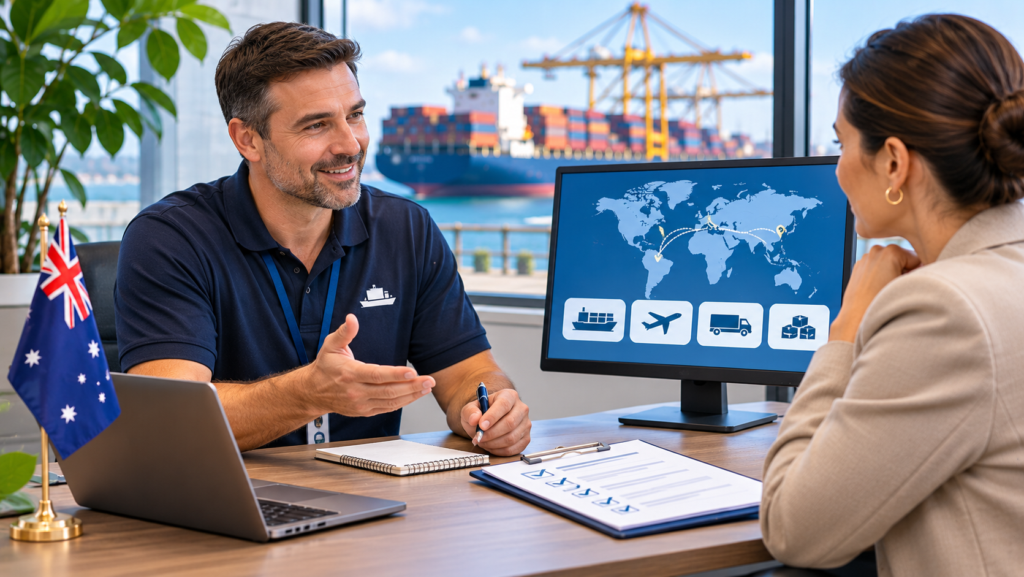
For most exporters, a freight forwarder handles the complexity of international shipping. They:
- Book vessel or aircraft space and negotiate rates
- Prepare and lodge the export declaration
- Coordinate collection from your premises to the port or airport
- Handle documentation flow between you, the shipping line and the buyer
- Manage export customs clearance
- Provide tracking and status updates
- Coordinate with the destination agent for handover
An experienced forwarder saves time, reduces risk and often accesses better freight rates than you could negotiate directly. Sea Logic’s freight forwarding services cover both import and export shipments across all major Australian ports and airports.
8. Export Customs Clearance
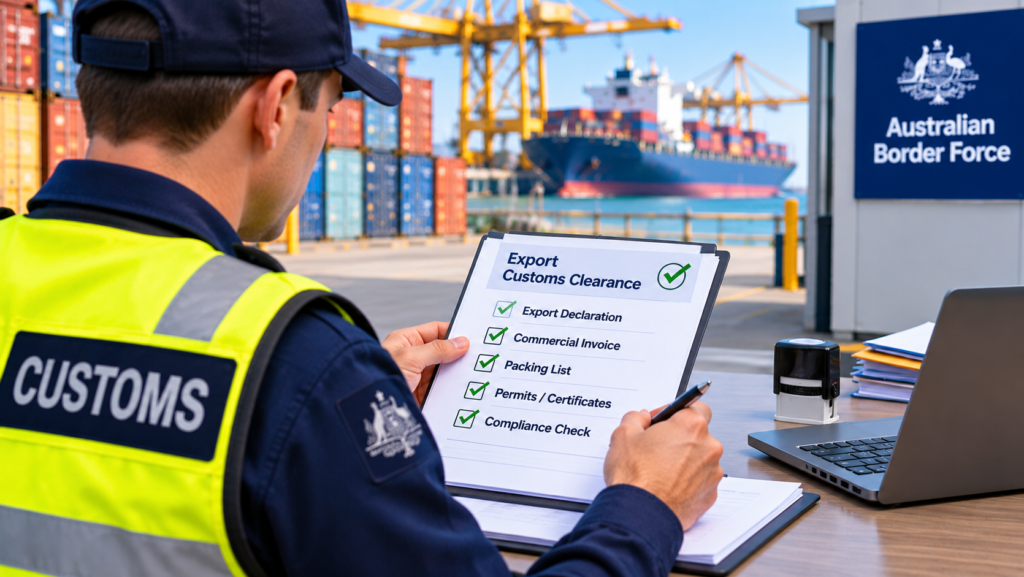
Australian export clearance is generally faster than import clearance because the ABF is not assessing duty (Australia does not charge export duty on most goods). The process involves:
1. Export declaration lodgement. Your freight forwarder lodges the B957 declaration through ICS.
2. ABF assessment. The declaration is checked against export controls. Most exports clear automatically.
3. Compliance checks. If the goods trigger export controls (regulated categories), a permit check or documentation review may occur.
4. Release for loading. Cleared goods are released for loading onto the vessel or aircraft.
For most standard exports, clearance happens without physical inspection. However, restricted or regulated goods (weapons, dual-use items, cultural heritage, biological products) undergo additional scrutiny.
9. Destination Country Requirements
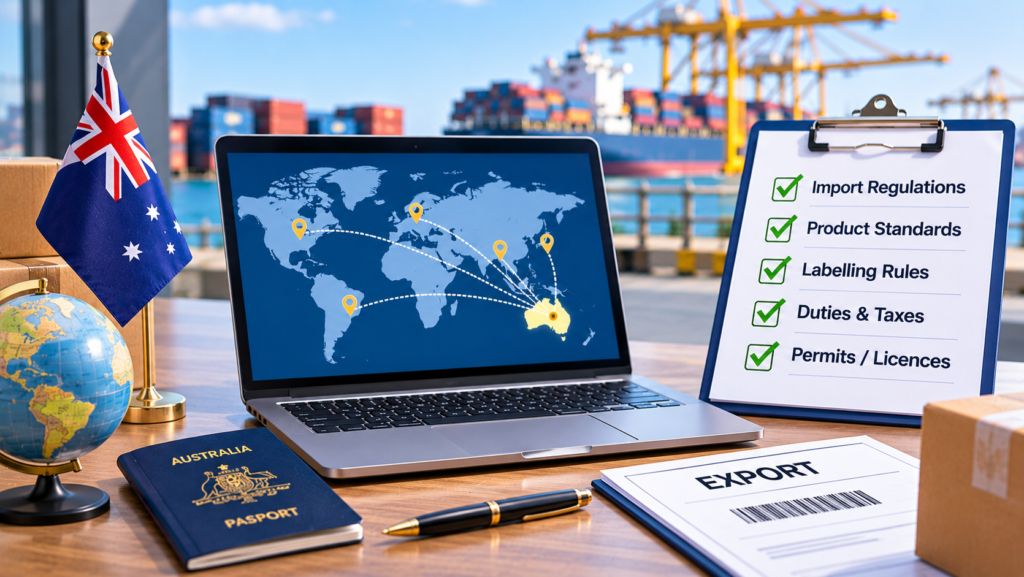
Your responsibility as an exporter does not end at the Australian port. The destination country has its own import requirements that affect your documentation and packing:
- Import declaration and duty payment (usually the buyer’s responsibility under FOB/CIF)
- Certificate of origin for FTA duty preferences
- Product-specific certification (food, pharmaceuticals, electronics, chemicals)
- Labelling in the destination country’s language or format
- Compliance with import bans, quotas or standards
Under most Incoterms, the buyer handles destination clearance. However, providing correct documentation from your end makes their clearance smoother. Ask your buyer or their customs broker for a documentation checklist specific to their country and product category.
10. Post-Departure Handover
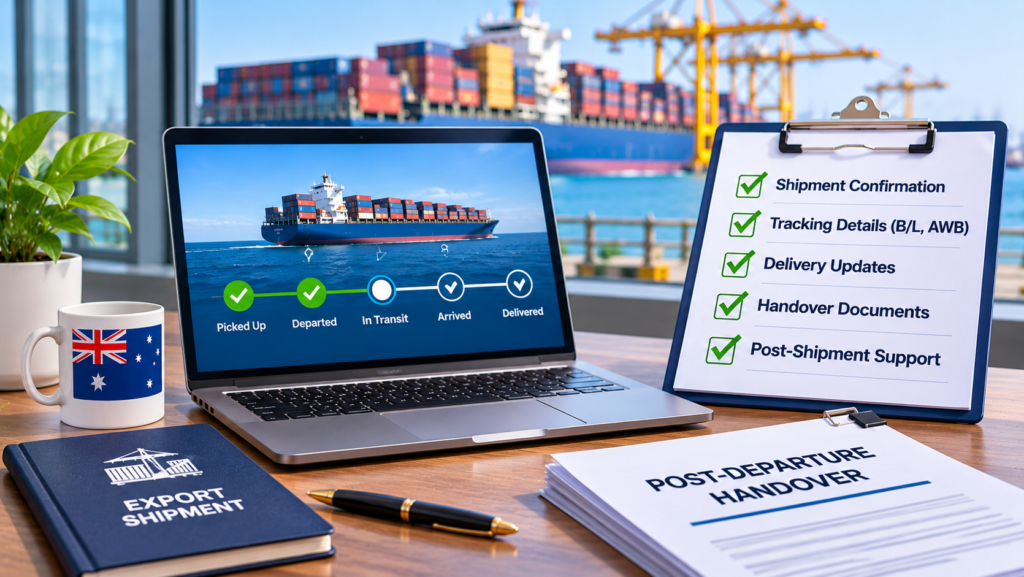
Once the shipment departs Australia, your freight forwarder continues managing the process:
- Documents (bill of lading, air waybill, invoice) are sent to the destination agent or directly to the buyer
- Tracking updates confirm the vessel or aircraft is on schedule
- Any exceptions (delays, damage, holds at destination) are communicated to you
- Confirmation of delivery or handover to the buyer’s nominated carrier
For payment terms involving a letter of credit, original documents are typically sent through banks rather than directly to the buyer. Your forwarder can coordinate this process to align with your payment terms.
11. Common Export Mistakes
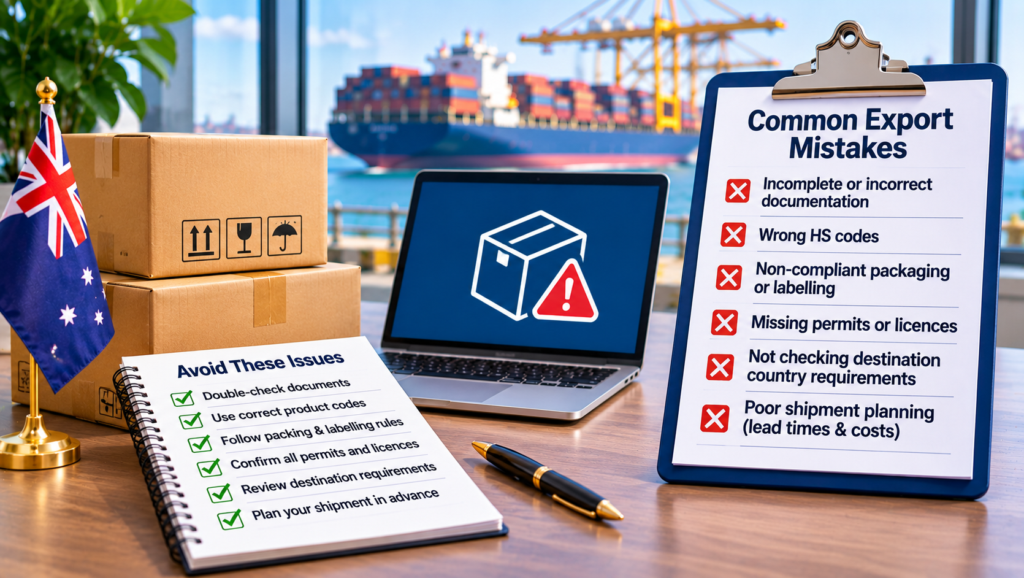
1. Incomplete or inaccurate documentation. The number one cause of export delays. Values, quantities and descriptions must match across all documents.
2. Not confirming destination requirements. Sending a shipment without confirming the buyer’s country has the required permits, standards or labelling.
3. Missing the VGM deadline for sea freight. Containers without a compliant Verified Gross Mass declaration cannot be loaded onto the vessel.
4. Wrong Incoterm choice. Agreeing to DDP without understanding destination clearance obligations can leave you exposed to unexpected costs.
5. Non-compliant timber packaging. ISPM 15 treatment is required for most destinations. Non-compliant packaging can result in re-export or destruction.
6. Inadequate cargo insurance. Marine cargo insurance is optional under most Incoterms. If the buyer is not arranging cover and you retain risk, arrange insurance yourself.
7. Underestimating lead times. Export planning needs buffer for production, transport to port, clearance and freight transit. Missing a promised delivery date damages buyer relationships.
12. Key Takeaways
Summary: Australian export checklist
Exporting requires its own process. Different regulations, documents and responsibilities than importing.
- Core documents: commercial invoice, packing list, bill of lading or air waybill, export declaration (over AUD $2,000), packing declaration and VGM (sea FCL).
- The Incoterm agreed with your buyer determines who pays for what.
- Correct packing, ISPM 15 timber compliance and clear labelling prevent destination clearance issues.
- A freight forwarder handles export declaration, freight booking, documentation and destination coordination.
- Australian export clearance is usually fast for standard goods. Regulated goods require additional permits.
- Confirm destination country requirements before shipping. Different countries, different rules.
- Post-departure handover ensures documents flow to the right party for release at destination.
13. Frequently Asked Questions
What documents do I need to export from Australia?
Core documents include a commercial invoice, packing list, bill of lading or air waybill, and (for goods over AUD $2,000) an Export Declaration (B957). Additional documents may include a certificate of origin, Shipper’s Letter of Instruction, Verified Gross Mass declaration, export permits and fumigation certificates depending on the product and destination.
Do I need an export declaration for every shipment?
An Export Declaration is required for goods with a FOB value over AUD $2,000. Shipments below this threshold typically do not need a formal declaration but may require customs reporting depending on the product category.
What is Verified Gross Mass (VGM) and when is it required?
VGM is a mandatory declaration of the total confirmed weight of a shipping container, including cargo, packaging and the container itself. It is required for all containerised sea freight exports under SOLAS regulations. Containers cannot be loaded onto the vessel without a compliant VGM.
Do I need a customs broker to export from Australia?
Not legally required, but strongly recommended. A broker (usually working alongside your freight forwarder) prepares the export declaration, verifies documentation and manages compliance. For businesses exporting regularly, the expertise saves time and prevents costly errors.
How long does it take to export goods from Australia?
Export clearance is typically completed within 1 to 2 business days for standard goods. Transit times depend on freight mode and destination. Air freight to Asia takes 3 to 5 days door-to-door. Sea freight to Asia takes 10 to 20 days, Europe 30 to 40 days.
Who pays for shipping when I export?
The Incoterm agreed with your buyer determines this. Under EXW, the buyer pays everything. Under FOB, you pay to the origin port and the buyer pays from there. Under CIF, you pay freight and insurance to destination port. Under DDP, you pay everything to the buyer’s door.
What is ISPM 15 and does it apply to my export?
ISPM 15 is an international standard for treating timber packaging to prevent pest transfer between countries. Most destinations require compliant packaging (heat-treated or fumigated timber marked with the IPPC stamp). If you use timber pallets, crates or dunnage, they must be ISPM 15 compliant.
Can Sea Logic help with exports?
Yes. Sea Logic provides end-to-end freight forwarding services for Australian exporters, including sea and air freight, customs brokerage, documentation and destination coordination.
Planning your next export shipment? Talk to Sea Logic about export freight, clearance and destination coordination. Call 03 9114 8543 or contact us at sealogic.com.au