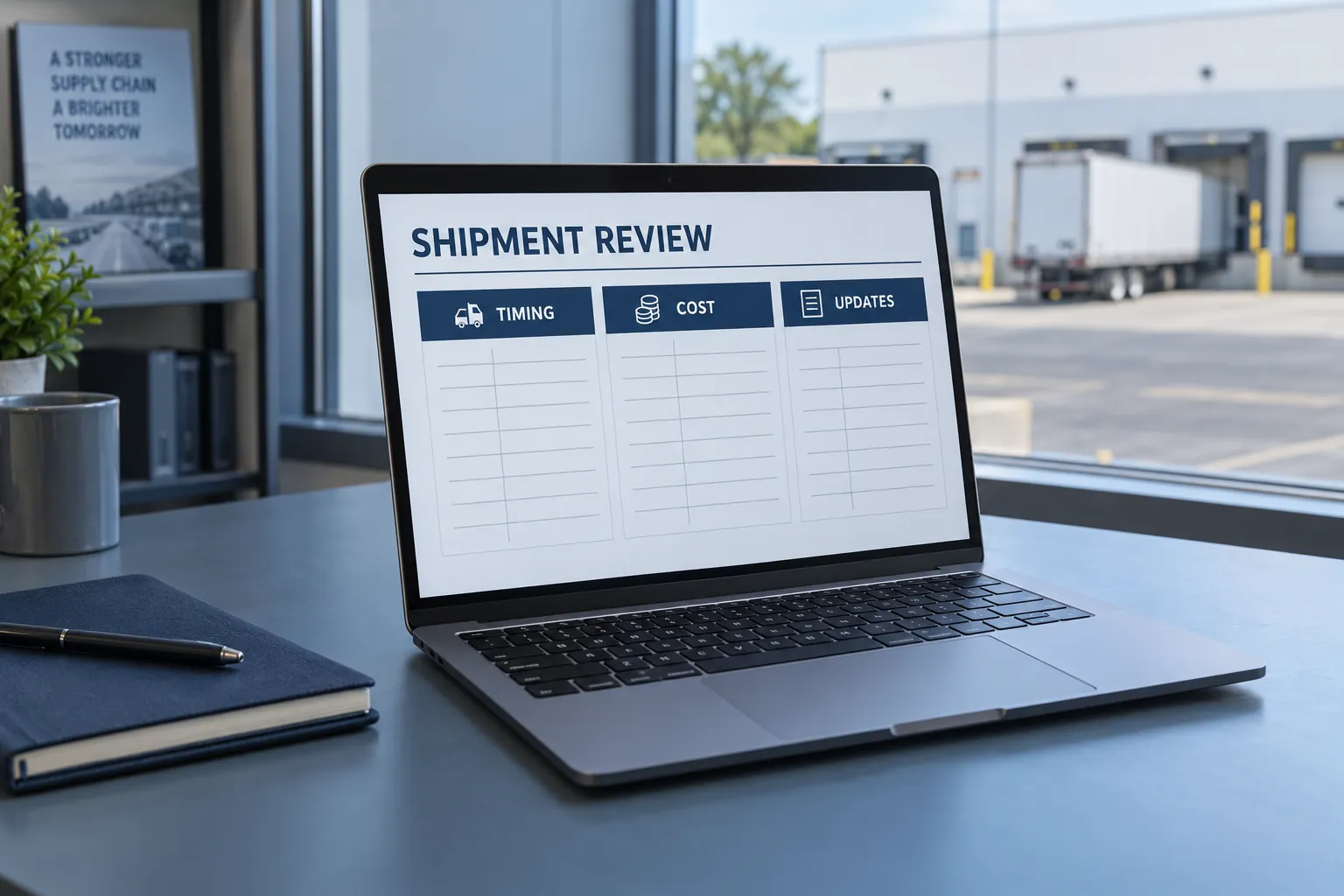
On-time delivery tells you whether a shipment met an agreed timing commitment. It is worth measuring. But the percentage alone does not show how late the exceptions were, whether extra transport was needed or whether your team received useful warning.
A more useful freight performance review keeps on-time delivery and adds a small number of measures that explain the result.
Define “on time” before calculating it
Choose the milestone being measured. Is it vessel arrival, cargo availability, delivery at your premises or goods ready for use? These are different events and should not be treated as interchangeable.
Agree the promised date or delivery window, the time zone, the reporting period and how split shipments or cancellations are handled. Preserve the original commitment and record agreed revisions separately, so moving a date does not silently erase a delay.
Use a denominator that includes the missed commitments
For a promised-date report, a useful calculation is:
On-time delivery rate = shipments delivered within their agreed window ÷ all eligible shipments due in the reporting period × 100.
For example, if 100 eligible shipments were due in a month and 92 arrived within their agreed windows, the result is 92%. This is an illustrative calculation, not Sea Logic performance data or an industry benchmark.
Keep overdue, undelivered shipments in that due-date cohort. Excluding them until they eventually arrive can make the current period look better than it was. Whatever definition you choose, use it consistently and disclose any exclusions.
Add measures that explain the experience
- Size of the delay: how far outside the agreed window were the late shipments? A small miss and a prolonged delay should not disappear into the same percentage.
- Readiness: were cargo and required documents ready by the agreed deadlines? This helps distinguish a transport issue from an earlier dependency.
- Exception communication: when was a material change identified, when was the customer told and was a clear next step provided?
- Cost changes: were additional services needed, why were they needed and were the charges approved?
- Recovery: after a disruption, how long did it take to achieve the agreed delivery outcome?
Keep the review proportionate. A small business may get more value from a clear shipment register and monthly conversation than from a complex dashboard that nobody maintains.
Compare similar movements
Separate different routes, transport modes and service commitments where the volume allows. Combining urgent air shipments with flexible sea freight movements can hide the reason a result changed.
Small samples also need context. Show the number of shipments alongside the percentage and explain major exceptions without exposing confidential customer or cargo information.
Finish with an improvement, not only a score
Ask what should change next time: an earlier document check, a different receiving arrangement, clearer escalation or a more realistic commitment. Assign an owner and review whether the change helped.
Our guide to sea freight delays and shipment planning checklist provide practical starting points. The purpose of measurement is a clearer conversation about the journey, not just a better-looking number.
Adapted for the Sea Logic website from our LinkedIn article, Why “On-Time Delivery” Is No Longer a Simple Supply Chain KPI, originally published 10 February 2026. This website edition adds context and practical guidance; its publication date is shown above.