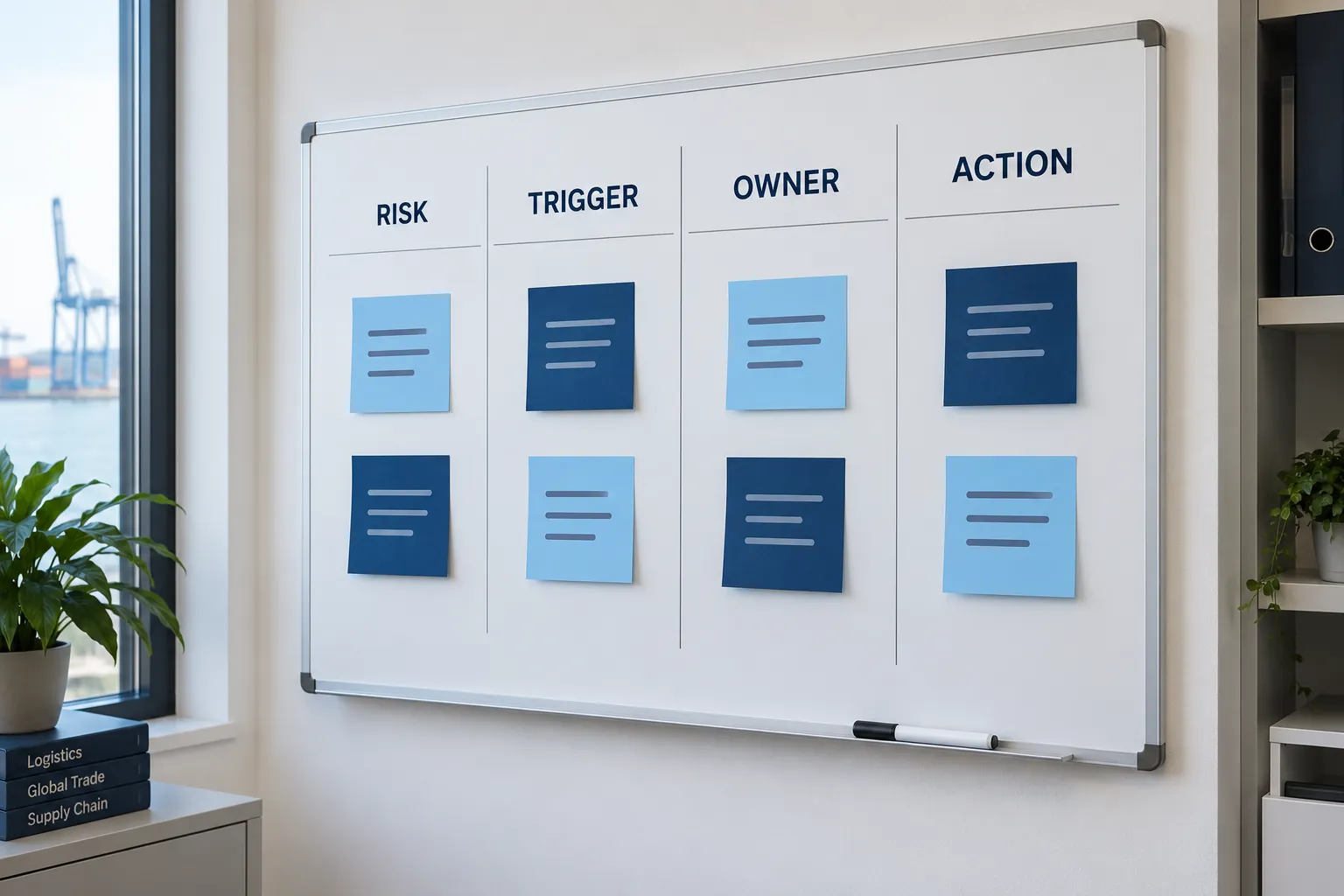
A freight plan explains how a shipment is expected to move. A contingency plan explains what you will do if a key assumption changes.
That distinction matters when cargo supports a production run, a customer commitment or a seasonal launch. Australian importers and exporters do not need to predict every disruption. They need a clear view of their critical dates, the consequences of delay and the decisions that cannot wait until arrival.
Begin with the business deadline
Record when the goods need to be available for use, not only the vessel’s expected arrival. Identify the receiving location and any appointment, unloading or processing requirements between arrival and that business deadline.
Then ask: what happens if this shipment is late? The answer may be a manageable stock adjustment, a missed customer delivery or an interrupted production schedule. Different consequences justify different levels of attention and contingency spend.
Map the handovers that could change the outcome
Review the shipment from supplier readiness through collection, departure, connections, documentation, clearance and final delivery. For each important handover, note the owner, expected timing and evidence that confirms it has happened.
Keep confirmed milestones separate from estimates. An expected cargo-ready date is not the same as packed goods ready for collection; a vessel arrival is not confirmation that cargo is available for delivery.
Give each risk a trigger and an owner
A useful risk entry is specific enough to prompt action. For example, in a hypothetical seasonal shipment:
- Risk: the supplier may miss the agreed cargo-ready date.
- Trigger: the supplier cannot confirm readiness by the review date agreed for that shipment.
- Owner: the buyer’s nominated logistics contact, working with the supplier and forwarder.
- Decision: reassess the booking and required delivery date; compare feasible alternatives before authorising extra cost.
The review date is shipment-specific. A generic number of “buffer days” is not a substitute for checking the actual route, deadlines and cargo requirements.
Discuss alternatives before they become urgent
Possible responses might include a different sailing, a revised delivery appointment or splitting time-critical goods from the balance. Suitability depends on cargo, documents, available services, capacity and cost. An alternative discussed in advance is not a reserved service unless it has been agreed and confirmed.
Give the decision-maker enough information to compare the revised arrival or delivery expectation, additional charges and any new handling requirements. Record the approved change so all parties work from the same plan.
Make updates actionable
A useful exception update answers four questions: what changed, what is the expected effect, what decision is needed and when will the next update come? Agree the contact and escalation path before departure.
After delivery, review which assumptions held and which did not. Update the next shipment brief with those lessons. Our shipment checklist and documents guide help organise the starting information.
Talk to Sea Logic about the priorities behind your international freight movement, so the proposed plan reflects what matters to your business.
Adapted for the Sea Logic website from our LinkedIn article, Why Logistics Teams Are Becoming Risk Managers, originally published 9 February 2026. This website edition adds context and practical guidance; its publication date is shown above.