The lowest freight rate is not automatically the wrong choice. It may be an excellent choice when the service matches your requirements. The problem is choosing between prices that describe different things.
For an Australian importer or exporter, a useful comparison looks at the agreed journey, the charges included, the timing assumptions and the work left for your own team. That is how a headline rate becomes an informed shipping decision.
Start with the same shipment brief
Give each provider the same cargo description, dimensions, weight, origin, destination, ready date and required delivery outcome. Include access restrictions, unloading needs and any special handling details.
State the agreed Incoterms rule and named place where relevant. These help define responsibilities between buyer and seller, but do not replace the provider’s quote inclusions. If the underlying brief changes, ask for a revised comparison rather than relying on the original total.
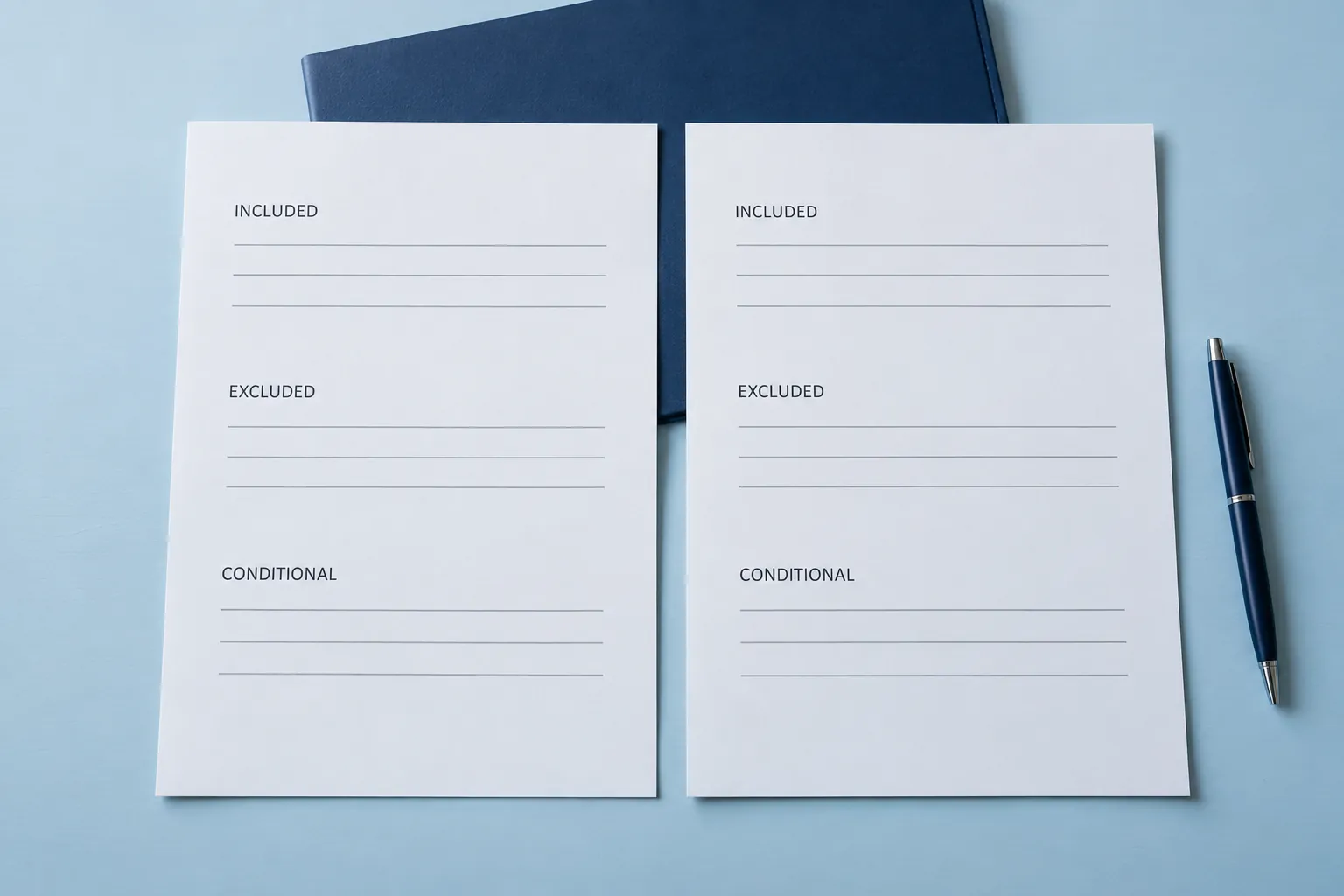
Separate the quoted price into three parts
- Confirmed inclusions: the transport legs and services covered, and whether each amount is fixed or estimated.
- Known exclusions: services or charges you will need to arrange or pay separately, such as particular local handling or delivery activities.
- Conditional costs: charges that may arise if an assumption changes, a container exceeds its applicable free period or an additional service becomes necessary.
Ask which currency applies to each amount, how long the quote is valid and whether taxes are included where relevant. Duties and import taxes should be identified separately from freight service charges; a freight quote should not be assumed to include your complete landed cost.
Compare timing as carefully as price
Two options can offer different routings, connections and estimated transit times. Ask what the quoted timing measures: departure to arrival, cargo availability, or delivery to your premises.
A port arrival estimate is not the same as a confirmed warehouse delivery appointment. Documentation, clearance, cargo release and inland transport still need to fit the plan. Our guide to sea freight delays explains some of these dependencies.
Match the option to the consequence of delay
Consider two hypothetical shipments: replenishment stock with flexible receiving dates, and a part needed before a production deadline. The same transport option may be suitable for one and unsuitable for the other.
Write down the operational consequence of missing the required date, then ask which available options address that exposure and at what additional cost. Do not assume a premium rate guarantees an outcome; confirm the actual service commitment and its limitations.
Make the decision visible
Keep a short record of why you selected an option: the agreed scope, important assumptions, accepted trade-offs and who will approve changes. When the shipment is complete, compare the final invoice and delivery outcome against that record.
Use our freight quote comparison checklist to organise the details. Sea Logic can help you discuss freight forwarding options around your cargo and business priorities—not just the first number on the page.
Adapted for the Sea Logic website from our LinkedIn article, Why Price Led Logistics Strategies Eventually Fail, originally published 21 January 2026. This website edition adds context and practical guidance; its publication date is shown above.