
Air freight is the fastest way to move cargo internationally, and for Australian importers and exporters, it’s often the deciding factor between hitting a customer deadline and missing one. But air freight is also expensive, capacity-constrained, and full of moving parts that catch first-time shippers out. This guide explains how international air freight actually works, what it costs, how long it takes on major lanes, and when it makes commercial sense.
Sealogic coordinates international air freight for Australian businesses through major air cargo gateways, including air freight services in Melbourne via Melbourne Airport Tullamarine. The rest of this guide is national and international in scope.
How does international air freight work?
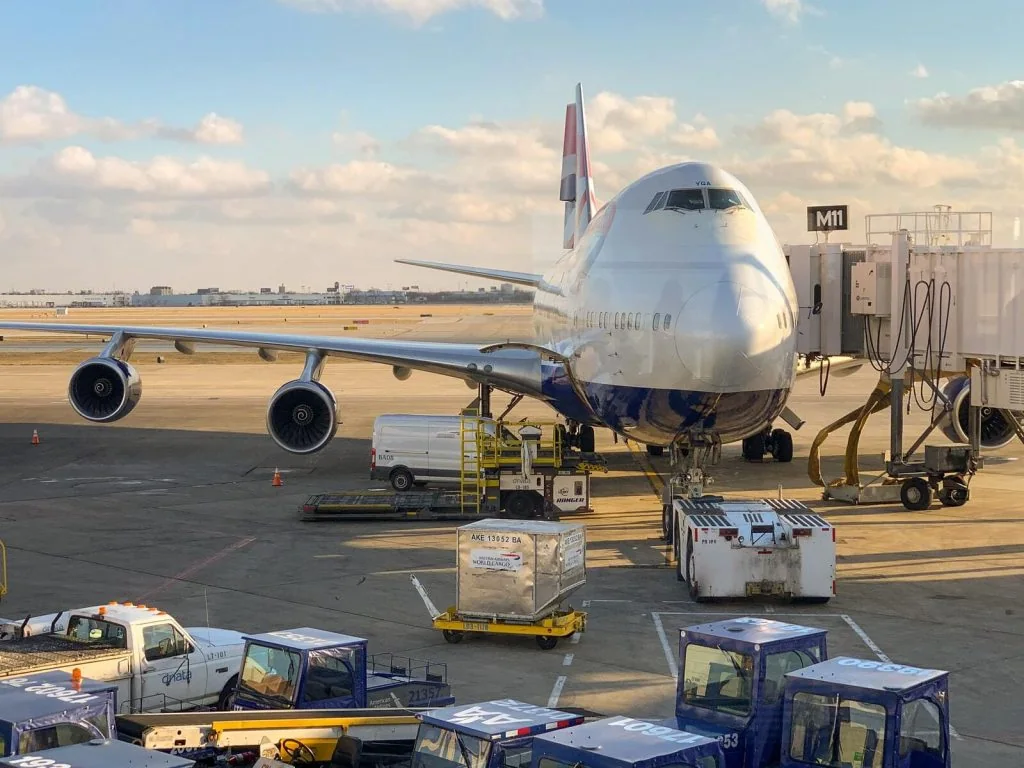
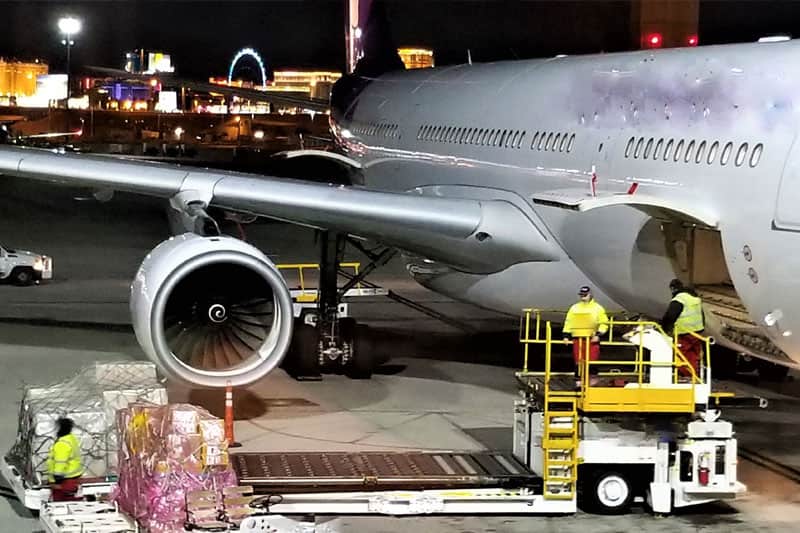
International air freight moves cargo on scheduled commercial or dedicated freighter flights between international airports, with cargo booked through airlines or freight forwarders, consolidated at origin, cleared through customs on arrival, and delivered to the final destination by road.
The end-to-end process runs through six stages:
- Booking with the airline or forwarder based on cargo weight, dimensions, and destination
- Pickup from the shipper and delivery to the origin airport cargo terminal
- Export customs clearance and airline acceptance
- Flight, often with a transit stop for long-haul lanes
- Import customs clearance at the destination airport
- Delivery by road to the consignee
A freight forwarder coordinates all six stages under one shipment reference, which is why most businesses use a forwarder rather than booking directly with an airline.
How long does international air freight take?
International air freight transit times typically range from one to seven days door-to-door, depending on lane, aircraft availability, transit stops, and customs processing at both ends.
Typical door-to-door transit ranges for cargo from Australia:
- Australia to Southeast Asia: two to four days
- Australia to East Asia (China, Japan, Korea): two to five days
- Australia to the Middle East and India: three to six days
- Australia to Europe: four to seven days
- Australia to North America: three to six days
Actual flight time is only a portion of this. Pickup, origin handling, customs clearance, transit stops, and final delivery usually make up more than half the total door-to-door timeline.
What does air freight actually cost?
Air freight is priced on chargeable weight, which is the greater of actual weight or volumetric weight, plus fuel surcharges, security surcharges, airport handling fees, customs clearance, and final delivery charges.
The main cost drivers to understand:
- Chargeable weight: airlines calculate volumetric weight as length x width x height (cm) divided by 6,000, then bill on whichever is higher between that and actual weight
- Fuel surcharges (FSC) and security surcharges (SSC): applied per kilogram and updated frequently
- Airport handling: cargo terminal fees at both origin and destination
- Customs and clearance: broker fees plus duty and GST on import
- Local delivery: pickup at origin and delivery to consignee at destination
A short, dense shipment (like machinery parts) usually pays actual weight. A light, bulky shipment (like garments or foam) usually pays volumetric weight. Understanding which side your cargo sits on is the single biggest lever on air freight cost.
When should you choose air freight over sea freight?
Air freight makes commercial sense when speed, product value, or inventory cost outweighs the higher freight rate, and sea freight makes sense for larger, lower-value, or less urgent shipments.
Choose air freight when:
- The cargo is time-critical (production line-down, seasonal launch, medical)
- The unit value is high enough that inventory holding cost exceeds the air premium
- The volume is small enough that a full sea container isn’t justified
- The product is perishable or has a short shelf life
- Sea freight capacity is constrained on the lane and delays are likely
Choose sea freight when:
- The cargo fills or nearly fills a container
- The unit value is low and freight cost is a large percentage of landed cost
- Lead times allow four to six weeks of transit
- The product isn’t time-sensitive
For a full explanation of the sea side, see our sea freight services across Australia page, and the why sea freight shipments get delayed guide for the risks that push some cargo to air.
What cargo types need specialist air freight handling?
Perishable, pharmaceutical, dangerous, oversized, and high-value cargo require specialist air freight handling with additional documentation, temperature control, or airline approvals.
Common specialist categories:
- Perishables (seafood, fresh produce, flowers) require cold chain from pickup through arrival
- Pharmaceuticals need temperature-controlled ULDs and often IATA CEIV Pharma certified handling
- Dangerous goods (lithium batteries, chemicals, aerosols) require IATA DGR compliance, correct classification, and airline pre-approval
- Oversized cargo may need dedicated freighter capacity rather than passenger belly-hold
- High-value cargo (electronics, jewellery, art) may require additional insurance and security handling
Getting these categories right at the booking stage avoids rejection at airline acceptance, which is the most expensive point in the process to discover a compliance gap.
How does customs clearance work for air freight into Australia?
Air freight customs clearance in Australia is handled by the Australian Border Force through the Integrated Cargo System, with declarations lodged by licensed customs brokers before or shortly after aircraft arrival at the destination airport.
Because air freight moves fast, customs delays are proportionally more painful. A two-day hold on a five-day sea shipment is minor. A two-day hold on a three-day air shipment defeats the point of paying the air premium. This is why pre-lodging documentation, correct tariff classification, and complete invoice descriptions matter more for air than for sea. For the full clearance picture, see our guide on how customs brokerage works in Australia.
How Sealogic supports international air freight
Sealogic coordinates international air freight for Australian importers and exporters, managing airline bookings, origin and destination handling, customs clearance, and door delivery. Our team handles standard cargo, express consignments, dangerous goods, cold chain, and consolidated air freight through major Australian and international airports.
FAQs
What is the fastest air freight service from Australia?
Express air freight services from Australia typically deliver door-to-door within one to three days on major lanes to Asia, the Middle East, Europe, and North America, using dedicated capacity and priority handling.
Is air freight worth the extra cost?
Air freight is worth the extra cost when the value of speed, whether measured in production continuity, inventory turnover, or customer commitment, exceeds the freight cost difference against sea freight, which is often the case for high-value, time-critical, or perishable cargo.
How is air freight weight calculated?
Air freight weight is calculated as chargeable weight, which is the greater of actual weight in kilograms or volumetric weight, calculated as length x width x height in centimetres divided by 6,000.
Can Sealogic handle dangerous goods air freight?
Yes. Sealogic coordinates dangerous goods air freight in line with IATA Dangerous Goods Regulations, including classification, packaging, labelling, documentation, and airline pre-approval.
Does Sealogic offer both import and export air freight?
Yes. Sealogic manages both import and export air freight for Australian businesses, covering airline bookings, customs clearance, and door delivery at both ends of the shipment.
Which Australian airports does Sealogic use for air freight?
Sealogic coordinates air freight through Australia’s major international cargo airports, including Sydney Kingsford Smith, Melbourne Tullamarine, Brisbane, and Perth.
How much notice do I need to book air freight?
Standard air freight bookings can often be arranged within 24 to 48 hours of pickup, while dangerous goods, cold chain, and oversized shipments generally require longer lead times to secure appropriate airline capacity and complete compliance checks.
Conclusion
International air freight rewards preparation. Cargo that arrives at the airport with clean documentation, correct classification, and the right airline booking moves fast. Cargo that doesn’t sits on the tarmac while the clock runs. For a specific international shipment or an ongoing air freight arrangement, contact the Sealogic team.