

One of the first questions Australian importers and exporters face is simple enough: do you need a whole container, or can you share one?
The answer depends on how much you are shipping, how quickly you need it and how much handling risk you are comfortable with. Get the decision right and you save money. Get it wrong and you either pay for empty space or rack up unexpected destination charges that eat into your margins.
This guide breaks down the key differences between FCL (Full Container Load) and LCL (Less than Container Load) shipping so you can make a confident, informed choice for your next sea freight shipment.
If you are new to importing by sea, our companion article on importing by sea freight covers the full end-to-end process.
Table of Contents
- What Are FCL and LCL? Quick Definitions
- FCL vs LCL: Side-by-Side Comparison
- How Costs Compare for Your Shipment
- Transit Times and Handling Differences
- Which Option Suits Your Business?
- Common Mistakes When Choosing FCL or LCL
- Can You Switch Between FCL and LCL?
- Key Takeaways
- FAQs
What Are FCL and LCL? Quick Definitions
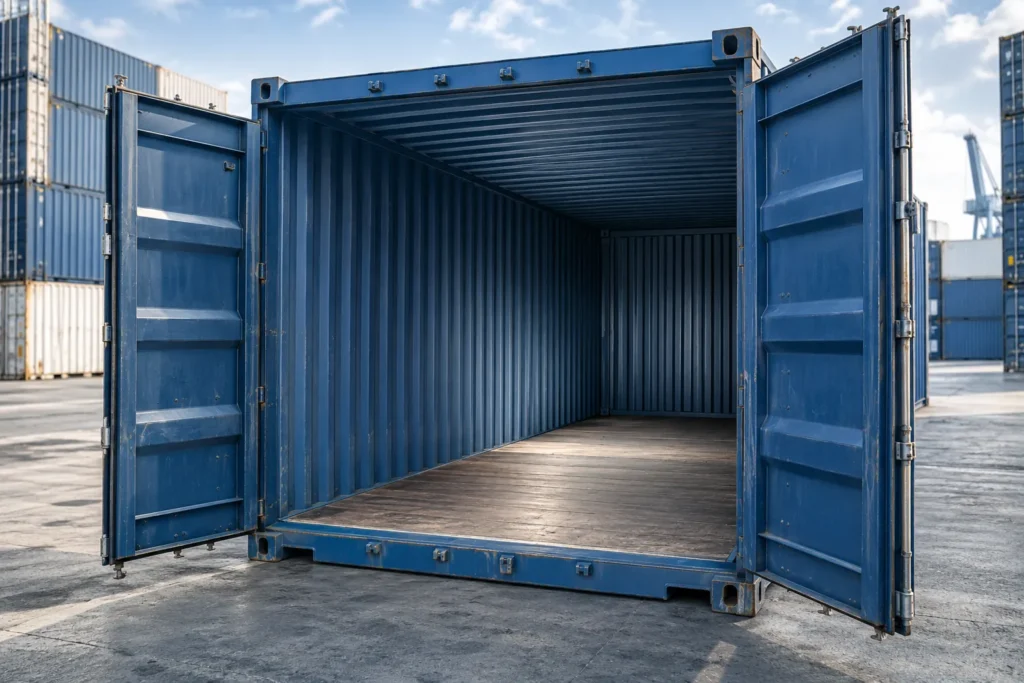
FCL (Full Container Load) means you book an entire shipping container for your goods only. Whether you fill it completely or not, the container carries your consignment rather than sharing space with other shippers. It is normally sealed after loading, although authorities may open it for inspection. Standard sizes are 20-foot (approximately 33 cubic metres capacity) and 40-foot (approximately 67 cubic metres capacity).
LCL (Less than Container Load) means your goods share container space with cargo from other shippers heading to the same destination port. Freight is commonly charged on a weight-or-measurement basis, with minimum charges and handling charges defined in the quote. Your cargo is consolidated at a Container Freight Station (CFS) at origin and deconsolidated at a CFS at the destination before collection or delivery.
Both options are standard offerings from any experienced sea freight forwarder. The right choice depends entirely on your specific shipment profile.
FCL vs LCL: Side-by-Side Comparison
Here is a straightforward comparison across the factors that matter most to Australian importers:
| Factor | FCL | LCL |
| Container Use | Exclusive – your cargo only | Shared with other shippers’ cargo |
| Pricing Model | Flat rate per container | Per cubic metre (CBM) or per tonne |
| Best For | Dedicated space, larger or dense consignments | Smaller suitable consignments and flexible ordering |
| Transit Time | No consolidation or deconsolidation stage for shared cargo | Allow for consolidation and deconsolidation; timing varies |
| Handling | Fewer individual cargo handovers; loading and unpacking still need planning | Multiple touchpoints at CFS depots |
| Cargo Security | Dedicated space; packing, securing and inspection requirements still apply | Shared space and additional handovers to consider |
| Damage Risk | Lower | Assess packaging and handling at additional handovers |
| Container Sizes | 20ft or 40ft (standard or high cube) | Charged per CBM used |
| Ideal Cargo | Bulk, fragile, high-value, regular imports | Samples, small orders, new product lines |
| Destination Process | Delivery or unpacking location depends on the agreed scope | Deconsolidated at CFS, then collected |
How Costs Compare for Your Shipment
Cost is usually the deciding factor, and the maths is more nuanced than most importers expect.
How FCL Pricing Works
With FCL, you pay a flat rate for the entire container regardless of how full it is. The rate covers the ocean freight component, and you will also pay origin charges (container handling, documentation, port fees at departure) and destination charges (terminal handling, port fees at the Australian end). On top of that, customs brokerage fees, duty, GST and local cartage from the wharf to your premises apply.
The advantage is predictability. Your freight cost does not change whether you fill 60 per cent or 100 per cent of the container. The more you fill it, the lower your cost per unit.
How LCL Pricing Works
LCL is priced per cubic metre (CBM) or per tonne, whichever is greater. You also pay CFS (Container Freight Station) handling charges at both the origin and destination, plus documentation fees. In Australia, LCL destination charges can be higher per shipment than many importers anticipate, because deconsolidation fees, terminal access charges and storage charges all apply.
For smaller suitable shipments, LCL can reduce the cost of booking dedicated space. Compare current quotes because weight, route, handling and local charges can change the result.
The Breakeven Point
Compare the actual shipment: There is no universal 15 CBM breakeven rule. The crossover depends on the quoted route, cargo weight, packed dimensions, handling and origin and destination charges. Ask for both suitable options on the same scope and compare the complete cost.
If both options suit your cargo, ask for quotes from your freight forwarder so you can compare the all-in landed cost rather than just the freight rate.
Transit Times and Handling Differences
Transit Times
LCL includes consolidation at origin and deconsolidation at destination, which need time in the plan. FCL avoids those shared-cargo stages, but the actual schedule depends on the selected service, routing, cargo readiness and release arrangements. FCL can also travel through transshipment ports.
Compare port-to-port estimates with port-to-port estimates, and door-to-door estimates with door-to-door estimates. Ask for the milestones and assumptions in the current quote rather than treating a general transit range as a delivery commitment.
Handling and Damage Risk
Every time your cargo is physically moved, there is a small risk of damage. FCL shipments are handled at fewer touchpoints: goods are packed into the container at origin, the container is normally sealed after loading, but inspection or other authorised handling may be required before delivery.
LCL cargo passes through more hands. At origin, your goods are delivered to a CFS where they are loaded alongside other shippers’ cargo. At the destination, the container goes to another CFS for unpacking and sorting. Each of these steps introduces a small but real risk of handling damage, moisture exposure or, in rare cases, cross-contamination from adjacent cargo.
For fragile goods, high-value items or cargo that is sensitive to contamination (such as food or pharmaceutical products), FCL provides a clear advantage even if the volume does not fully justify it on cost alone.
Which Option Suits Your Business?
There is no single right answer. The best choice depends on where your business sits right now. Here is a practical decision framework:
Choose FCL When:
– The full-container quote and handling arrangements suit your weight and packed dimensions
– You import regularly and can plan shipments to maximise container fill
– Your cargo is fragile, high-value or contamination-sensitive
– The available FCL service and delivery arrangements suit your required timing
– You want fewer handling touchpoints and tighter control over your supply chain
– You have warehouse capacity to receive a full container
Choose LCL When:
– Your cargo is accepted for consolidation and the LCL quote suits the shipment
– You are testing a new product line or supplier and want to start small
– Cash flow is tight and you need a lower upfront freight cost
– Your delivery timeline allows for the quoted consolidation and deconsolidation stages
– You are importing from multiple suppliers in the same region and want separate smaller shipments rather than waiting to consolidate
Expert Tip: Many growing businesses start with LCL and transition to FCL as their order volumes increase. If you are regularly shipping 8 to 12 CBM, talk to your freight forwarder about whether consolidating two orders into a single FCL shipment would save money overall. Sometimes adjusting your ordering cycle by a week or two makes the maths work in FCL’s favour.
Sea Logic helps Australian importers assess the right container option for every shipment. Our team can model both options against your cargo profile and provide a clear all-in cost comparison. Speak with our sea freight team for tailored advice.
Common Mistakes When Choosing FCL or LCL
- Comparing freight rates without factoring destination charges. The ocean freight rate is only part of the equation. LCL destination charges in Australia (deconsolidation fees, CFS handling, terminal access) can significantly increase the total cost. Always compare all-in landed costs, not just the headline freight number.
- Shipping a small volume in an FCL container. A lightly filled container may still be appropriate for dense, sensitive or otherwise unsuitable shared cargo. Compare weight, handling suitability and both complete quotes before choosing by volume alone.
- Ignoring weight limits. Confirm the permitted payload for the actual container and transport legs. Dense cargo can reach a weight limit before filling the available volume, and concentrated loads need separate review. For LCL, check the quoted weight-or-measurement basis and minimum charges.
- Not planning container return timelines for FCL. Confirm the booked free time, its start and end events, and the applicable detention, demurrage and storage charges with the relevant operators. Charges and terms vary. Arrange receiving and empty return before arrival.
- Choosing LCL when cargo is contamination-sensitive. If you are importing food, beverages, cosmetics or pharmaceutical products, the risk of odour transfer or moisture from adjacent cargo in a shared container is a real consideration. Dedicated space reduces exposure to other shippers’ cargo, but does not eliminate contamination or moisture risk. Packing and container suitability still need review.
Can You Switch Between FCL and LCL?
Absolutely. There is no commitment to one method. Many Australian importers use both, depending on the shipment.
A regular stock replenishment order of 20 CBM might go FCL. A smaller top-up order of 3 CBM might go LCL. A sample shipment from a new supplier might go LCL while you are trialling the product, then shift to FCL once you are ordering at scale.
Some businesses also use a hybrid approach: splitting their order between a time-sensitive portion sent by air freight and a larger portion sent by sea. Your freight forwarder can advise on the most practical combination for your specific supply chain needs.
Sea Logic manages both FCL and LCL shipments through all major Australian ports, arranging customs brokerage through licensed brokerage partners and coordinating port transport as part of the agreed shipment plan.
Key Takeaways
Summary: FCL vs LCL at a glance
– FCL gives you a dedicated container. LCL shares space with other shippers.
– Compare current complete quotes; no universal volume threshold determines the cheaper option.
– FCL avoids shared-cargo consolidation stages; actual delivery timing depends on the booked service and handovers.
– FCL usually involves fewer individual cargo handovers. Both options need suitable packing and handling.
– Always compare all-in landed costs, not just the freight rate.
– You can switch between FCL and LCL from shipment to shipment. There is no lock-in.
– Where both options are suitable, compare their full scope, handling and total cost.
– Talk to your freight forwarder about the right option for each shipment.
Further reading
See DHL Global Forwarding’s explanation of LCL cost drivers and Maersk’s guidance on ocean transit times. Use the current shipment quote for the actual costs and schedule.
Frequently Asked Questions
What does FCL mean in shipping?
FCL stands for Full Container Load. It means you book an entire shipping container exclusively for your cargo. The container is normally sealed after loading; authorities may open it for inspection before delivery. Standard container sizes are 20-foot (approximately 33 CBM capacity) and 40-foot (approximately 67 CBM capacity).
What does LCL mean in shipping?
LCL stands for Less than Container Load. Your goods share container space with cargo from other shippers. Freight is commonly charged on a weight-or-measurement basis, with minimum charges and handling charges defined in the quote. Goods are consolidated at a Container Freight Station at origin and deconsolidated at the destination.
When is FCL cheaper than LCL?
FCL can be cheaper when its complete quoted cost is below the suitable LCL alternative. Weight, dimensions, route, handling and local charges determine the comparison. There is no universal 15 CBM crossover.
Is LCL shipping slower than FCL?
LCL has consolidation and deconsolidation stages that can add time. Compare the actual services and milestones for your route; there is no fixed extra number of days that applies to every shipment.
Can I ship both FCL and LCL at the same time?
Yes. Many importers use both methods depending on the shipment. A large stock order might go FCL while a smaller supplementary order goes LCL. There is no restriction on using different container options for different shipments, even from the same supplier.
What are deconsolidation fees for LCL in Australia?
Deconsolidation fees are charged at the destination CFS when your LCL goods are separated from other shippers’ cargo. The fees vary by port, operator, cargo and quoted terms. Ask for the current charges and their calculation basis. They are in addition to your ocean freight rate and can significantly affect the total cost of LCL shipping, particularly for smaller volumes.
What size containers are available for FCL?
Common equipment includes 20-foot standard, 40-foot standard and 40-foot high-cube containers. Internal dimensions, usable volume and permitted payload depend on the actual equipment and loading arrangement; confirm the operator’s specifications. Refrigerated (reefer) containers and open-top containers are also available for specialised cargo.
How do I decide between FCL and LCL for my first import?
Start with the packed dimensions, weight, cargo description and receiving arrangements. Confirm acceptance and handling suitability, then compare current FCL and LCL quotes on the same scope, including the applicable origin, destination and local transport charges.
Does the same comparison apply to scrap metal?
Sea Logic specialises in scrap metal shipments. Cargo acceptance, loading method, weight distribution and equipment suitability must be reviewed before comparing freight options. A volume threshold does not establish whether scrap metal is suitable for LCL. Our scrap-metal shipping guide explains what to include in the cargo brief.
Planning FCL or LCL exports from Australia
For an Australian export, start with the loading or collection point and your overseas buyer’s receiving arrangements. FCL needs a suitable loading site, equipment availability and an agreed packing and securing scope. LCL needs a confirmed consolidation point and cargo handover. Compare the origin handling, international carriage and destination responsibilities on the same basis. Work back from cargo and document cut-offs, and confirm who arranges overseas clearance and receipt.
Plan your export from Australia: collection, loading, documents, cut-offs and overseas handover.
Not sure whether FCL or LCL is right for your next shipment? Talk to Sea Logic about the right container option for your cargo. Call 03 9114 8543 or request a quote at sealogic.com.au